
Views: 0 Author: Site Editor Publish Time: 2026-10-03 Origin: Site


Upgrading auxiliary lighting is a major safety and performance investment for nighttime driving. Selecting the wrong setup often results in excessive wind noise, blocked radiator airflow, or terrible light distribution on the trail. Buyers usually default to the highest lumen count they can find. They completely ignore how diode arrangement impacts beam throw, aerodynamic drag, and mounting constraints on modern trucks. This oversight leads to compromised vehicle cooling and frustrating driving experiences. We will break down the technical and practical differences between single and dual row configurations. We analyze optical physics, electrical draw, and physical mounting realities from real off-road experience. You will learn how to select the exact lighting architecture required for your specific driving environment and vehicle build. Matching your light housing to your application guarantees you get the visibility you actually need.
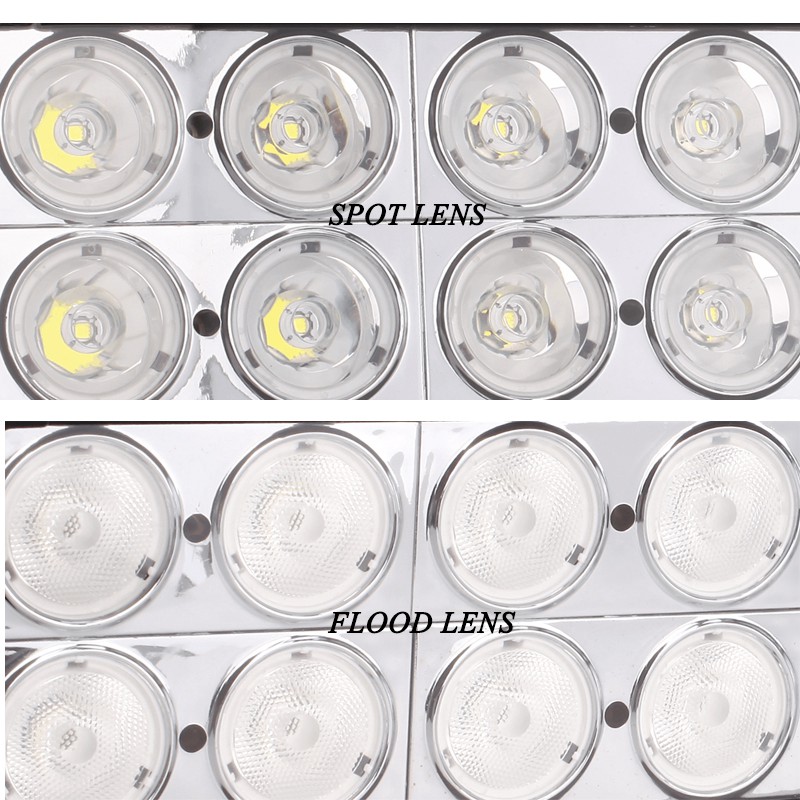
Beam Dynamics: Single row configurations typically utilize larger, deeper reflectors to maximize forward throw (distance), while dual row configurations excel at broad flood coverage for immediate peripheral visibility.
Aerodynamic Impact: Dual row bars create significantly more wind resistance and turbulence, often requiring vibration dampeners or aerodynamic covers to mitigate high-speed whistling.
Mounting Constraints: Single row bars offer a low-profile footprint ideal for tight grille inserts and roof racks, whereas dual row bars require substantial clearance and robust mounting brackets to support their increased weight and height.
Electrical Load: While dual row bars contain twice the diodes, the actual lumen output and amp draw are rarely double that of a single row; efficiency depends heavily on the internal circuitry and heat sink design.
Choosing the right LED light bar requires understanding the fundamental structural differences between housing types. Manufacturers engineer these housings with specific operational goals in mind. The physical layout of the diodes dictates how the light performs in real-world conditions. We see many drivers buy a light based purely on looks, only to realize it performs poorly for their specific needs.
A single row LED light bar features a single horizontal alignment of LED chips. This structural layout reveals a highly efficient design. Engineers maximize reflector depth within a minimal vertical footprint. Deeper reflectors capture more photons emitted by the diode. They focus these photons into a tight, forward-projecting beam.
The design prioritizes distance and precision. By keeping the housing slim, manufacturers reduce the overall mass and aerodynamic profile. These units integrate well with factory vehicle lines. They sit flush in bumper slots or behind grilles rather than dominating the front end of the vehicle. This low-profile approach appeals to drivers who want massive light output without altering their vehicle's factory silhouette. You can tuck a 20-inch single row into the lower bumper opening of a modern half-ton truck and barely notice it is there until you flip the switch.
Dual row configurations utilize two stacked horizontal rows of LED chips within a single housing. This structural layout highlights a completely different engineering philosophy. The primary design goal is maximizing raw diode density. Manufacturers aim to pack as much total lumen output as possible per inch of bar width.
Because the housing must accommodate two rows of diodes, the internal reflectors are generally shallower. This physical limitation changes the way light escapes the housing. The aesthetic is aggressive and prominent. It provides a traditional 4x4 off-road appearance. A dual row unit features a highly visible vertical profile that clearly signals a modified, purpose-built off-road machine. When you mount a massive 50-inch dual row above the windshield of a Jeep Wrangler, it becomes the focal point of the entire build.
Comparing identical lengths is necessary for accurately evaluating output, weight, and mounting viability. You must evaluate a 40-inch single row against a 40-inch dual row to understand the true performance deltas. A 40-inch dual row will always weigh significantly more due to the larger aluminum heat sink required to cool twice as many diodes.
When you compare equal lengths, the optical differences become obvious. The 40-inch single row will project light further down the trail. The 40-inch dual row will flood the immediate area with a wider spread of light. Evaluating identical lengths also highlights the stark differences in mounting requirements and electrical draw. A single row might weigh 6 pounds, while its dual row equivalent tips the scales at 14 pounds. That weight difference completely changes how you must design your mounting brackets.
Performance cannot be measured by simply looking at a light in a dark room. You must evaluate how the optics manipulate the light source. Beam patterns dictate how fast you can safely drive at night. Usable light is the only metric that matters when navigating unpredictable terrain.
Optical physics govern how light travels from the diode to the trail. Single row bars often achieve better forward projection, known as throw. This happens due to less optical interference and deeper individual parabolic reflectors. A deep reflector captures the light scattering off the sides of the diode and redirects it straight ahead. This focused beam pushes usable light to 80+ yards, allowing high-speed drivers to spot hazards early.
Conversely, we must evaluate dual row spread. Stacked diodes in shallower reflectors create a massive wall of light. This flood pattern is ideal for low-speed, wide-angle trail navigation. It maximizes 50-60 yard peripheral visibility. When you are rock crawling or navigating tight, winding forest trails, you need to see the ditches and trees immediately next to your vehicle. The dual row excels in this environment. You want to see the sharp rock threatening your sidewall, not a deer 200 yards away.
Raw lumen counts are highly misleading marketing metrics. Lumens measure the total amount of light emitted by the diodes at the source. They do not measure where that light goes. For example, a dual row claiming 23,000 lumens versus a single row at 20,000 lumens represents a marginal difference. This slight increase is often imperceptible to the human eye.
We must introduce Lux as the primary evaluation metric for high-speed driving. Lux measures usable light intensity at a specific distance. A 20,000-lumen single row will often register a much higher Lux reading at 100 yards than a 23,000-lumen dual row. The single row focuses its light on a specific target area. The dual row scatters its extra lumens into the trees and sky, wasting potential forward visibility.
Color temperature significantly impacts driver endurance. Most modern auxiliary lights operate between 5000K and 6500K. However, the beam pattern dictates how this color temperature interacts with environmental hazards. The dense flood pattern of a dual row bar can create severe foreground glare in dusty, foggy, or snowy conditions.
When a wide wall of light hits airborne dust particles, it reflects directly back into the driver's eyes. This creates a blinding white wall. This phenomenon causes faster driver eye fatigue. A tightly focused single row beam punches through dust and fog more effectively. By minimizing foreground spill, it preserves your natural night vision and reduces eye strain during long off-road sessions.
Mounting auxiliary lighting requires careful spatial planning. You cannot simply bolt a massive light to any surface and expect it to perform well. Physical dimensions dictate where a light can live on your vehicle. Ignoring these realities leads to structural damage and compromised vehicle cooling.
You must assess the spatial requirements for an offroad truck LED light bar in factory bumper slots and hidden grille mounts. Modern trucks feature complex front fascias. Space is incredibly limited behind the grille. A single row unit easily slides into these narrow gaps. It mounts securely without modifying factory plastics.
We must discuss the risk of dual row bars obstructing critical airflow. Modern trucks rely on massive grilles to feed air to radiators, transmission coolers, and intercoolers. Mounting a tall, bulky dual row unit directly in front of these heat exchangers restricts airflow. This restriction can cause engine overheating during slow, high-load off-road driving or heavy towing. We have seen countless trucks overheat on steep inclines simply because a massive light blocked the radiator.
Roof mounting introduces complex physics. You must evaluate the center of gravity and leverage applied to roof mounting brackets. On full-size trucks, a heavy dual row unit sits high above the roofline. This creates significant leverage against the mounting hardware when hitting bumps. On UTV and RZR roll cages, this high center of gravity can slightly alter vehicle dynamics.
Compare the visual obstruction from the driver's seat. Mounting a tall dual row above the windshield often blocks a portion of the driver's upward visibility. This is problematic when ascending steep hills. A slim single row sits lower to the roofline. It preserves the driver's field of view while providing ample forward illumination.
Weight is a major factor in off-road durability. Dual row units carry significantly more mass due to the extra diodes, larger circuit boards, and massive aluminum cooling fins. This weight discrepancy causes intense hardware strain during off-road vibration.
You need heavy-duty, reinforced brackets when installing dual row bars. Standard aluminum mounts will flex under the weight of a dual row unit on corrugated dirt roads. This flexing causes severe beam jitter, making it impossible to see clearly. You must use thick, gusseted steel brackets to prevent metal fatigue and keep the light beam perfectly stable.
Adding a large rectangular object to the exterior of a vehicle ruins its aerodynamic profile. Wind noise is one of the most common complaints after installing auxiliary lighting. Understanding fluid dynamics helps you mitigate these frustrating side effects.
We must explain the fluid dynamics of air passing over the cooling fins of a taller, bulkier housing at highway speeds. As air rushes over the deep heat sink fins of a dual row unit, it creates vortex shedding. The air separates and rejoins rapidly behind the light. This rapid separation creates a distinct, high-pitched whistling sound.
Identify the common harmonic resonance issues specific to dual row designs. When mounted above the windshield, the airflow is compressed between the roof and the light housing. The taller profile of a dual row unit exacerbates this compression. The resulting harmonic resonance can vibrate the entire roof panel, creating an unbearable droning noise inside the cabin at speeds above 50 mph.
Evaluate the effectiveness of rubber dampeners. Placing rubber isolators between the light bracket and the vehicle body absorbs high-frequency vibrations. Angled mounting also helps. Tilting the light slightly downward changes the angle of attack, disrupting the airflow and reducing vortex shedding.
Aftermarket aerodynamic covers and silencers are highly effective. These slide over the cooling fins to create a smooth surface for the air to pass over. They eliminate the whistle entirely and can also add custom styling to your build. The single row unit has an inherent aerodynamic advantage. Its slim profile slices through the air cleanly. Daily-driven vehicles rarely require aftermarket noise mitigation when utilizing a single row design.
Install rubber isolation pads under the main mounting feet to absorb chassis vibrations.
Adjust the pitch of the housing downward by two degrees to change the aerodynamic angle of attack.
Snap on polycarbonate aerodynamic covers for highway transit to smooth airflow over the cooling fins.
Relocate the light from the roof to the front bumper to remove it from the high-velocity air stream above the windshield.
Auxiliary lighting requires substantial electrical power. You cannot simply tap into existing vehicle wiring to power massive diode arrays. Understanding your vehicle's electrical capacity is necessary to prevent catastrophic failures.
Compare the actual power consumption between equivalent lengths of single and dual row bars. Power is measured in Watts and Amps. While a dual row has twice the diodes, it rarely draws exactly twice the amperage. Manufacturers often under-drive the diodes in dual row units to manage heat. However, a 40-inch dual row will still draw significantly more power than its single row counterpart.
High-output dual row bars can strain stock alternators. Older 4x4s and smaller UTV stators have limited electrical output. If your alternator produces 90 amps, and your vehicle requires 60 amps to run the engine, fuel pump, and HVAC, you only have 30 amps of overhead. A massive dual row LED light bar can easily draw 25 amps. This leaves zero margin for error and can quickly drain your battery, leaving you stranded on the trail.
You must use the correct gauge of wiring to safely power stacked diode configurations. You must use thick, high-quality copper wire to handle the current. Using thin wire creates immense electrical resistance. This resistance manifests as heat, which can melt wire insulation and cause vehicle fires.
Relay ratings are equally important. Never wire a high-output light directly through a dashboard switch. The switch will melt. You must use a heavy-duty relay rated for at least 40 amps. The switch activates the relay, and the relay handles the heavy current direct from the battery. Proper wiring prevents voltage drops, blown fuses, and dangerous thermal events.
Light Bar Size | Configuration | Estimated Wattage | Estimated Amp Draw (at 12V) |
|---|---|---|---|
20-Inch | Single Row | 100W | 8.3 Amps |
20-Inch | Dual Row | 180W | 15.0 Amps |
40-Inch | Single Row | 200W | 16.6 Amps |
40-Inch | Dual Row | 360W | 30.0 Amps |
50-Inch | Single Row | 250W | 20.8 Amps |
50-Inch | Dual Row | 450W | 37.5 Amps |
Selecting the right configuration requires an honest assessment of how you use your vehicle. There is no universal best option. You must match the physical and optical characteristics of the light to your specific driving environment.
The single row configuration is the superior choice for specific success criteria. Choose this option if you engage in high-speed desert running where long-distance beam throw is necessary. It is the only logical choice for tight mounting spaces like factory grilles or narrow hood slots.
Daily drivers requiring minimal wind noise should always default to a single row. Builds prioritizing a stealthy factory look benefit from the slim profile. If your primary goal is spotting hazards at maximum distance without disrupting your vehicle's aerodynamics or cooling system, the single row is your ideal solution.
The dual row configuration excels in entirely different environments. Success criteria for this option include low-speed rock crawling and navigating dense forest trails. In these scenarios, you need maximum peripheral illumination to see obstacles directly beside your tires.
Heavy-duty commercial equipment, such as tractors and excavators, benefit greatly from the massive flood pattern. Dedicated off-road builds where aggressive aesthetics are desired often utilize dual row units to achieve that classic, rugged 4x4 appearance. If you rarely exceed 30 mph on the trail and need to light up an entire campsite or worksite, choose the dual row.
You must balance the desire for maximum raw output against physical realities. A dual row gives you a massive wall of light, but you trade away aerodynamic efficiency and easy mounting. You must deal with increased wind noise and higher electrical draw.
A single row gives you incredible distance and a sleek profile, but you trade away the extreme wide-angle flood coverage. Evaluate your primary driving speed. Speed dictates the need for distance. Terrain dictates the need for width. Make your choice based on these operational realities.
Feature | Single Row Configuration | Dual Row Configuration |
|---|---|---|
Beam Pattern | Focused, long-distance throw | Wide, immediate flood coverage |
Aerodynamics | Low drag, minimal wind noise | High drag, prone to whistling |
Mounting Profile | Slim, fits tight grille spaces | Bulky, requires ample clearance |
Electrical Draw | Moderate amp draw | High amp draw |
Ideal Use Case | High-speed driving, daily drivers | Low-speed trails, work equipment |
Aesthetic | Stealthy, modern integration | Aggressive, traditional off-road |
Measure your intended mounting location precisely for both depth and height clearance to ensure the housing will not rub against factory plastics or block radiator airflow.
Check your vehicle's alternator output capacity and calculate your current electrical load to ensure you have enough overhead to power a high-amperage auxiliary light.
Determine your primary driving environment by analyzing whether you spend more time on high-speed open terrain or low-speed technical trails.
Inspect your intended mounting points to verify they are structurally sound enough to support the weight and leverage of your chosen light configuration.
A: No. While dual rows have twice the diodes, raw lumens do not equal usable brightness. Dual rows offer more spread (flood), but not necessarily double the distance or usable intensity (lux). The actual lumen increase is often marginal because manufacturers must manage the extreme heat generated by stacked diodes.
A: A single row is generally better for modern truck bumpers. Space constraints and airflow considerations are critical. A slim single row fits into factory bumper slots without blocking the airflow required to cool the radiator and intercooler, preventing engine overheating during heavy use.
A: No. While the horizontal width is identical, the vertical height and physical depth of a dual row require significantly more clearance. A dual row will not fit into the tight grille gaps that easily accommodate a single row, and it requires heavier, reinforced mounting hardware.
A: Single rows are significantly less prone to wind noise. Their slim aerodynamic profile allows air to pass over them smoothly. Dual rows feature tall cooling fins that create vortex shedding and harmonic resonance, which causes the notorious high-speed whistling effect above the windshield.
A: Yes. Single row housings utilize deeper parabolic reflectors. These deep reflectors capture and focus the light into a tight, forward-projecting beam. This optical advantage allows a single row to project usable light much further down the trail, often effectively reaching 80+ yards.
A: You must calculate the exact amp draw (Watts divided by Volts). Most large dual row bars require at least a 12-gauge or 10-gauge copper wire harness paired with a 40-amp relay. Undersized wiring will cause severe voltage drops, excessive heat, and potential electrical failure.


