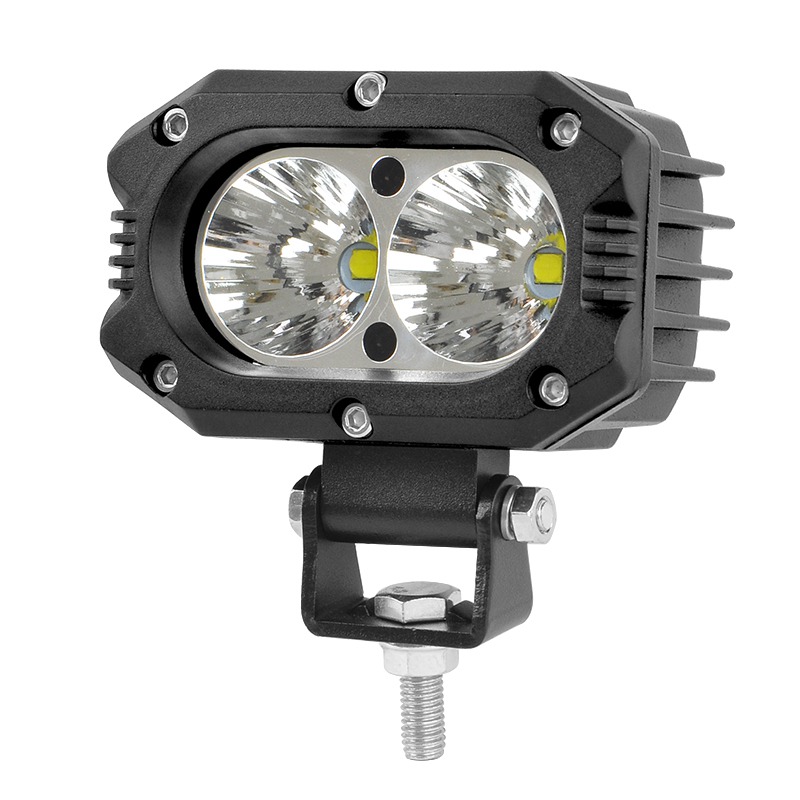
Inadequate visibility in industrial, agricultural, marine, or off-road environments directly correlates to increased operational risk, physical fatigue, and decreased productivity. Operating heavy machinery or navigating rough terrain requires precise lighting to identify hazards early. The core problem across the industry lies in misleading lighting specifications. Manufacturers frequently use theoretical "raw lumens" to obscure actual usable light output, ignoring thermal degradation and poor optical efficiency. This leaves operators with fixtures that underperform when they need them most.
Selecting the right illumination requires looking past marketing claims and understanding the physics of light projection. A technical evaluation framework is necessary to choose an LED work light based on effective output, beam geometry, optical technology, environmental durability, and specific application constraints. This guide breaks down the engineering principles behind high-performance lighting, equipping you with the knowledge to evaluate optics, manage thermal loads, and match beam patterns to real-world operational demands.
Key Takeaways
Raw vs. Effective Output: Raw lumen counts are theoretical; procurement decisions must be based on effective lumens, which account for thermal, electrical, and optical losses.
Optical Design Dictates Efficiency: Total Internal Reflection (TIR) optics deliver superior beam control and higher effective output compared to traditional reflector cups.
Beam Geometry Dictates Utility: High brightness is useless without the correct optical pattern (spot, flood, combo, or scene) matched to the vehicle's speed and the specific task.
EMI/RFI Shielding is Essential: High-quality LED work lights must include electromagnetic interference shielding (e.g., CISPR 25 compliance) to prevent interference with GPS, radio, and telemetry equipment.
Thermal Management is Critical: Compact fixtures require superior passive heat sinking and thermal foldback circuitry to prevent diode throttling and premature failure.
Decoding LED Work Light Brightness: Raw vs. Effective Lumens
The "Raw Lumen" Marketing Trap
Raw lumens represent a theoretical calculation. Manufacturers determine this number by multiplying the maximum rated output of a single diode by the total number of diodes in the fixture, assuming they are driven at maximum capacity. This metric fails in real-world conditions because it ignores physical limitations. Driving diodes at absolute maximum capacity generates excessive heat, which quickly destroys the components. To manage this heat, engineers intentionally under-drive the LEDs. Consequently, the diodes never actually achieve their theoretical maximum output, making raw lumens an inaccurate measure of performance. When you are out in the field running a combine harvester at midnight, theoretical numbers do not help you see the edge of the field.
Understanding Effective Lumens and Optical Efficiency
Effective lumens provide a realistic measurement of actual light output. This metric accounts for physical and optical variables that reduce light transmission. Optical lens inefficiency, reflector geometry, housing design, and electrical resistance all contribute to output losses. The choice of optics heavily influences this efficiency. Traditional reflector cups spill light and can lose up to 30% of the initial output. In contrast, Total Internal Reflection (TIR) optics capture and direct up to 95% of the light emitted by the diode. This results in a significantly higher effective-to-raw lumen ratio, delivering more usable light to the target area.
Metric
Definition
Real-World Reliability
Raw Lumens
Theoretical max output of all diodes combined.
Low. Ignores heat and optical losses.
Effective Lumens
Actual light projected out of the fixture.
High. Accounts for thermal and optical efficiency.
Lux
Light intensity over a specific surface area.
Very High. Measures actual task visibility.
Thermal Degradation and Junction Temperature
Heat buildup at the LED junction directly reduces diode efficiency over time. As the junction temperature rises, luminous efficacy drops, resulting in less light output for the same electrical input. Active thermal management is critical to combat this physics challenge. Robust aluminum heat sinks draw heat away from the circuit board. Additionally, thermal foldback circuitry monitors temperatures and temporarily dims the light slightly to prevent catastrophic burnout. This active management maintains sustained brightness during extended operations in harsh environments, such as continuous night-shift mining operations.
Metric Evaluation: Lux vs. Lumens vs. Candela
Understanding lighting metrics ensures you select the right tool for the job. Lumens measure the total volume of light emitted in all directions, offering a general sense of overall power. Lux measures light intensity over a specific area, with one Lux equaling one Lumen per square meter. Lux serves as the definitive metric for evaluating actual task visibility because it tells you how much light reaches your working surface. Candela measures luminous intensity in a specific direction. High candela ratings define beam throw distance, which is critical for spot and driving applications where seeing far downrange is necessary.
Color Rendering Index (CRI) and Color Temperature
Spectral quality, measured by the Color Rendering Index (CRI), is essential for safety. A high CRI (80+) helps operators accurately distinguish colors, identify wiring, spot terrain hazards, and reduce eye fatigue during long shifts. Color temperature, measured in Kelvin, dictates the tint of the light. The industry standard sits between 5000K and 5700K. This range simulates natural daylight, reducing eye strain and cutting through dust particles or fog effectively. Harsh blue-tinted lights exceeding 6000K cause severe backscatter reflection, blinding the operator in dusty or foggy conditions.
Selecting the Right Beam Pattern for Your Application
Flood and Scene Beams (Wide-Area Illumination)
Flood beams utilize wide-angle dispersion, typically ranging from 60 to 90 degrees. These patterns are ideal for slow-moving agricultural equipment, stationary work sites, and utility vehicle illumination where peripheral vision is paramount. Scene beams push this concept further with ultra-wide dispersion patterns exceeding 120 degrees. Scene lighting provides short-range, shadow-free illumination around the immediate perimeter of a vehicle or structure, creating a safe, highly visible work zone for ground crews.
Spot and Hyper-Spot Beams (Distance and Speed)
Spot beams rely on narrow-angle optics, usually between 10 and 20 degrees. They are designed for high-speed off-roading, search-and-rescue operations, or long-distance marine navigation. Hyper-spot beams feature ultra-narrow optics under 10 degrees. These specialized reflectors throw light hundreds of meters downrange. This extended visibility is necessary to match the stopping distance of high-speed vehicles, allowing operators to react to obstacles before it is too late.
Combo Beams (Versatility in Action)
Hybrid optical configurations evaluate the trade-offs of combining spot and flood reflectors within a single housing. A multi-purpose solution is often required for dynamic environments. A heavy-duty 4X4 LED Work Light for Tractor Boat applications benefits immensely from a combination pattern. It allows operators to see peripheral hazards nearby while simultaneously maintaining crucial downrange visibility for navigation through tight channels or dense woods.
Form Factor and Output Density: Evaluating Compact Solutions
The Role of the 4 Inch LED Work Light
The standardization of shape has made the 4 inch LED work light a universal standard for tight mounting spaces. These compact units fit easily onto vehicle bumpers, A-pillars, Roll-Over Protective Structures (ROPS), and heavy equipment cabs without obstructing the operator's view. Advancements in engineering have drastically improved the output-to-size ratio. Manufacturers can now pack high-wattage, tier-one diodes into a small envelope, delivering massive illumination from a minimal footprint.
Engineering Challenges of Compact Housings
Thermal density presents a significant structural challenge in small fixtures. Less surface area means less space to dissipate heat generated by powerful diodes. Advanced passive cooling designs utilize deep-pinnate heat sink fins. These fins maximize surface area contact with ambient air, drawing heat away from the internal circuitry and preventing thermal throttling in restricted spaces. When mounting these on a skid steer, ensuring airflow around the fins is critical for longevity.
Motorcycles require specialized evaluation criteria due to space and power limitations. Selecting a compact, square LED motorcycle auxiliary light involves balancing output with electrical draw. Low-output motorcycle charging systems dictate that high efficacy (Lumens per Watt) is non-negotiable. Furthermore, vibration and aerodynamics play a massive role. Lightweight, low-drag housings and robust mounting brackets are required to withstand extreme engine vibration and high-speed wind resistance without shifting alignment.
Durability, Compliance, and Environmental Resilience
Ingress Protection (IP Ratings)
Environmental resilience is defined by Ingress Protection (IP) ratings. Understanding these ratings ensures the fixture survives its intended environment.
IP67: Dust-tight; withstands temporary submersion in water up to 1 meter for 30 minutes.
IP68: Dust-tight; withstands continuous submersion under pressure, typically up to 3 meters.
IP69K: Dust-tight; withstands close-range, high-pressure, high-temperature washdowns. This rating is essential for agricultural, mining, and food-processing equipment that undergoes aggressive cleaning.
Electromagnetic and Radio Frequency Interference (EMI/RFI)
High-frequency switching circuits in LED drivers generate electromagnetic noise. This noise disrupts VHF marine radios, CB radios, GPS receivers, and agricultural auto-steer systems. To ensure absolute electromagnetic compatibility, it is critical to select fixtures certified to strict standards. Look for compliance with CISPR 25 Class 3 or Class 5 standards, which guarantee the light will not interfere with sensitive onboard electronics.
Structural Resilience: Vibration, Shock, and Corrosion
High-vibration applications like tractors, heavy excavators, and corrugated off-road tracks destroy fragile electronics. Solid-state circuitry, silicone-potted electronics, and heavy-duty, dampening mounting brackets provide necessary vibration isolation. For marine and coastal environments, corrosion resistance is paramount. Marine-grade powder coatings, UV-stabilized polycarbonate lenses, and Grade 316 stainless steel mounting hardware prevent saltwater degradation and ensure long-term structural integrity.
Cost vs. Value: Professional Trade-offs in LED Procurement
Diode Selection and Binning
The quality of the light source dictates the lifespan of the fixture. Tier-one diodes offer superior longevity, color consistency, and efficiency compared to generic alternatives. LED manufacturers sort diodes through a process called binning, categorizing them by output, color temperature, and voltage. Premium lights cost more because they utilize only the highest-performing bins, ensuring consistent, reliable illumination across every unit purchased.
Fleet Standardization
Standardizing lighting across a fleet simplifies maintenance and reduces overhead. Implementing modular wiring systems with plug-and-play connectors, such as Deutsch DT Connectors, offers significant operational advantages. This approach minimizes spare parts inventory, streamlines field replacements, and ensures technicians can swap damaged units quickly without specialized splicing tools.
Electrical Integration and Installation Best Practices
Calculating System Load and Duty Cycles
Before installing auxiliary lighting, calculate the current draw using the fundamental formula: Amps = Watts / Volts. Performing a charging system audit ensures the alternator of a tractor, boat, or auxiliary stator on a motorcycle can handle the additional load without draining the battery. Overloading the system leads to dead batteries and potential alternator failure.
Wiring and Circuit Protection
Proper electrical integration prevents fires and component damage. Selecting the correct wire gauge (AWG) based on current draw and the length of the wire run prevents voltage drops and melted wire jackets. High-power LED arrays must be wired with dedicated relays, inline fuses, and water-resistant switches. This isolates the heavy load from the vehicle's primary wiring harness, protecting sensitive factory electronics.
Follow these steps for a secure installation:
Disconnect the negative battery terminal to prevent accidental shorts.
Mount the fixture securely using vibration-dampening rubber pads.
Route the wiring harness away from moving parts and high-heat sources like exhaust manifolds.
Install the relay close to the battery and secure the inline fuse within 12 inches of the power source.
Test the system load with a multimeter before finalizing the wire loom.
Mounting Geometry and Glare Mitigation
Mounting height affects the angle of incidence, footprint size, and shadow rendering of a work light. Higher mounting positions generally provide better area coverage and reduce harsh shadows. Glare avoidance is equally important. Prevent back-reflection and hood glare by positioning lights carefully, particularly on agricultural tractors with front-mounted lights or off-road vehicles with hood and A-pillar brackets. Using glare shields or adjusting the downward angle improves operator visibility.
Beam Pattern
Angle Range
Primary Application
Spot
10° - 20°
High-speed driving, distance visibility
Flood
60° - 90°
Slow-moving equipment, work sites
Scene
120°+
Immediate perimeter illumination
Combo
Variable
Multi-purpose off-road and marine
Conclusion
Audit your current lighting setup to identify fixtures suffering from poor optical efficiency or thermal degradation.
Calculate your vehicle's available electrical capacity using the Amps = Watts / Volts formula before purchasing new fixtures.
Select beam patterns specifically tailored to your operational speeds and environments, avoiding generic solutions.
Prioritize fixtures with verified IP69K ratings and CISPR 25 EMI shielding for demanding conditions.
FAQ
Q: What is the difference between raw and effective lumens?
A: Raw lumens are a theoretical calculation based on the maximum output of the diodes. Effective lumens measure the actual light projected after accounting for thermal, electrical, and optical losses in the real world.
Q: Why do my LED lights interfere with my radio?
A: Cheap LED drivers generate electromagnetic interference (EMI). To prevent this, choose lights certified to CISPR 25 standards, which include shielding to block radio frequency noise.
Q: What does an IP69K rating mean for a work light?
A: IP69K indicates the light is completely dust-tight and can withstand close-range, high-pressure, high-temperature water jets, making it ideal for heavy equipment washdowns.
Q: How do I choose the right wire gauge for installation?
A: Wire gauge is determined by the total amperage draw of the lights and the length of the wire run. Use a standard AWG chart to select a size that prevents voltage drop and overheating.
Q: Can I use a flood beam for high-speed driving?
A: No. Flood beams disperse light widely over a short distance. High-speed driving requires spot or hyper-spot beams to throw light far downrange, matching your stopping distance.
Shenzhen Creek Optoelectronic Technologies Co., Ltd. produce Car LED work lights, off-road LED light bar, forklift safety lights, agricultural tractor work lights, LED strobe and beacon lights, car radios, etc.