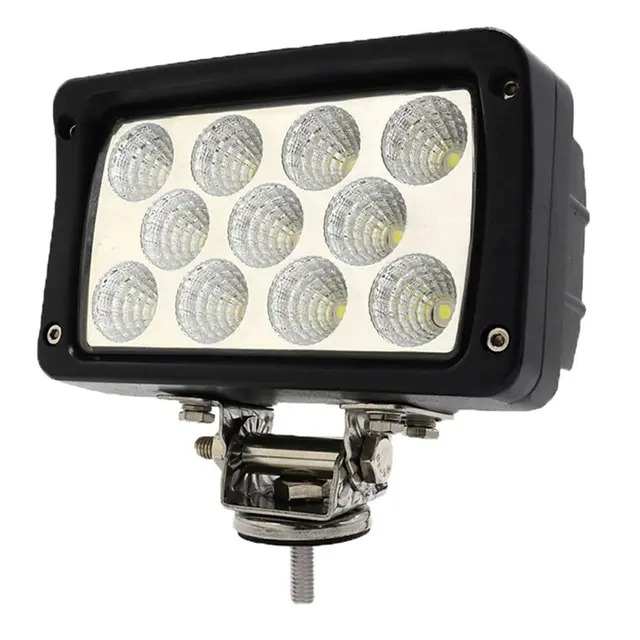
Off-road work lights are essential components for vehicles that traverse challenging terrains and operate in low-light conditions. These lights enhance visibility, ensuring safety and efficiency during nighttime operations or in environments with poor lighting. Understanding the materials that make up these Off-road Work light assemblies is crucial for manufacturers, engineers, and consumers alike. This article delves into the various materials used in the construction of off-road work lights, examining their properties, benefits, and the reasons behind their selection.
Aluminum Alloy Housings
One of the primary materials used in off-road work lights is aluminum alloy. The housings of these lights are typically made from die-cast aluminum due to its exceptional properties. Aluminum alloys offer a perfect balance between strength and weight, providing robust protection for the internal components without adding significant mass to the vehicle.
Aluminum is renowned for its excellent thermal conductivity, which is essential for dissipating heat generated by high-intensity LEDs. Proper heat dissipation extends the lifespan of the LEDs and maintains optimal performance. Additionally, aluminum's corrosion resistance ensures durability in harsh environmental conditions, including exposure to moisture, mud, and salt.
Advantages of Aluminum in Off-road Lighting
The use of aluminum in off-road work lights provides several advantages:
Lightweight construction reduces the overall weight burden on the vehicle.
High strength-to-weight ratio enhances the durability of the light housing.
Excellent thermal management capabilities help maintain LED efficiency.
Resistance to corrosion extends the lifespan of the lighting equipment.
Polycarbonate (PC) Lenses
The lenses of off-road work lights are predominantly made from polycarbonate (PC). PC is a thermoplastic polymer known for its high impact resistance and optical clarity. These properties make it an ideal material for lenses that need to withstand debris, stones, and other hazards commonly encountered in off-road environments.
Polycarbonate lenses also offer UV resistance, which prevents yellowing and degradation over time. This ensures consistent light transmission and maintains the aesthetic appearance of the lights. The flexibility of PC allows manufacturers to create complex lens shapes to optimize light distribution patterns, catering to specific illumination requirements.
Benefits of Using Polycarbonate Lenses
Polycarbonate lenses offer several benefits in off-road lighting applications:
High impact resistance protects against damage from external impacts.
Excellent light transmittance ensures maximum brightness and clarity.
UV resistance preserves lens integrity and transparency over time.
Design flexibility allows for optimized beam patterns.
LED Light Sources
The core of modern off-road work lights is the Light Emitting Diode (LED) technology. LEDs have revolutionized lighting due to their efficiency, longevity, and compact size. They are typically made from semiconductor materials such as gallium arsenide (GaAs), gallium phosphide (GaP), or gallium nitride (GaN).
These semiconductor materials are layered to create p-n junctions, which emit photons when an electrical current passes through them. The specific materials used determine the wavelength and color of the emitted light. For off-road work lights, white LEDs are preferred for their broad-spectrum illumination, closely resembling natural daylight.
Advantages of LEDs in Off-road Applications
LEDs are favored in off-road work lights due to their numerous advantages:
High energy efficiency reduces power consumption from the vehicle's battery.
Long lifespan minimizes the need for frequent replacements.
Durability and resistance to vibration make them suitable for rugged terrains.
Compact size allows for versatile and sleek light designs.
Thermal Interface Materials (TIMs)
Effective thermal management in off-road work lights is critical to ensure the longevity and performance of the LEDs. Thermal Interface Materials (TIMs) are used to facilitate heat transfer from the LED components to the heat sinks. Materials such as thermal pastes, pads, or graphite sheets are commonly employed.
TIMs fill microscopic air gaps between surfaces, enhancing thermal conductivity. High-quality TIMs are essential to prevent overheating, which can lead to reduced light output or premature failure of the LEDs. The selection of appropriate TIMs depends on factors like thermal conductivity, ease of application, and long-term stability.
Importance of Thermal Management
Proper thermal management using TIMs offers several benefits:
Maintains optimal LED operating temperatures for consistent performance.
Prevents thermal degradation and extends the life of the LEDs.
Enhances overall reliability of the off-road work lights.
Gaskets and Seals
Off-road environments expose work lights to dust, water, and other contaminants. To protect the internal components, gaskets and seals made from materials like silicone rubber or EPDM rubber are used. These materials provide excellent sealing properties, flexibility, and resistance to environmental factors.
Silicone rubber gaskets offer high-temperature resistance and maintain elasticity over a wide temperature range, ensuring a reliable seal in varying conditions. EPDM rubber is known for its outdoor durability, resistance to UV radiation, and ability to withstand ozone exposure.
Protecting Against the Elements
The use of high-quality gaskets and seals provides critical protection:
Prevents ingress of water and dust, safeguarding electronic components.
Maintains internal pressure and prevents condensation.
Ensures the longevity and reliability of the lighting system.
Mounting Brackets and Hardware
The mounting hardware for off-road work lights must be robust and resistant to vibrations and shocks. Materials like stainless steel and hardened aluminum are commonly used for brackets, screws, and bolts. Stainless steel offers excellent corrosion resistance, essential for components exposed to the elements.
Some designs incorporate adjustable brackets for versatile installation options. The hardware must maintain structural integrity under dynamic loads encountered during off-road use, ensuring that the lights remain securely attached to the vehicle.
Ensuring Secure Installation
Quality mounting materials contribute to the safety and functionality of the lights:
Resist loosening due to vibrations and impacts.
Provide flexibility in positioning and aiming the lights.
Enhance the overall aesthetic integration with the vehicle.
Electrical Wiring and Connectors
The electrical components of off-road work lights include wiring harnesses and connectors made from materials designed to withstand environmental stresses. Wires are typically insulated with materials like PVC or cross-linked polyethylene (XLPE) to resist abrasion, chemicals, and temperature variations.
Connectors are often sealed and may be made from durable plastics or metal alloys with rubber seals. They ensure reliable electrical connections even when exposed to moisture and dirt. The use of high-quality connectors reduces the risk of electrical failures and maintains consistent power delivery to the lights.
Maintaining Electrical Integrity
Proper materials in wiring and connectors are vital for performance:
Ensure safe and reliable electrical connections.
Protect against short circuits and electrical faults.
Enhance durability under mechanical stresses and environmental exposure.
Surface Coatings and Finishes
To further enhance durability and appearance, off-road work lights often feature surface coatings and finishes. Powder coatings or anodized finishes are applied to aluminum housings to provide additional corrosion resistance and aesthetic appeal. These coatings also offer protection against scratches and abrasions.
UV-resistant paints can be used to prevent fading and maintain the appearance of the lights over time. The choice of finish can also reduce glare and reflections, which is beneficial in certain lighting applications.
Enhancing Durability and Aesthetics
Surface finishes contribute to both function and form:
Protect underlying materials from environmental damage.
Improve resistance to wear and tear.
Enhance the visual integration with the vehicle's design.
Conclusion
Understanding the materials used in off-road work lights reveals the intricacies involved in designing equipment capable of withstanding harsh conditions while delivering optimal performance. From durable aluminum housings and impact-resistant polycarbonate lenses to efficient LED components and reliable thermal management systems, each material plays a crucial role. For those seeking high-quality Off-road Work light solutions, considering these material aspects is essential. Manufacturers continue to innovate, developing materials and technologies that push the boundaries of durability, efficiency, and performance, ensuring that off-road enthusiasts and professionals have the lighting tools they need to navigate the toughest environments.


