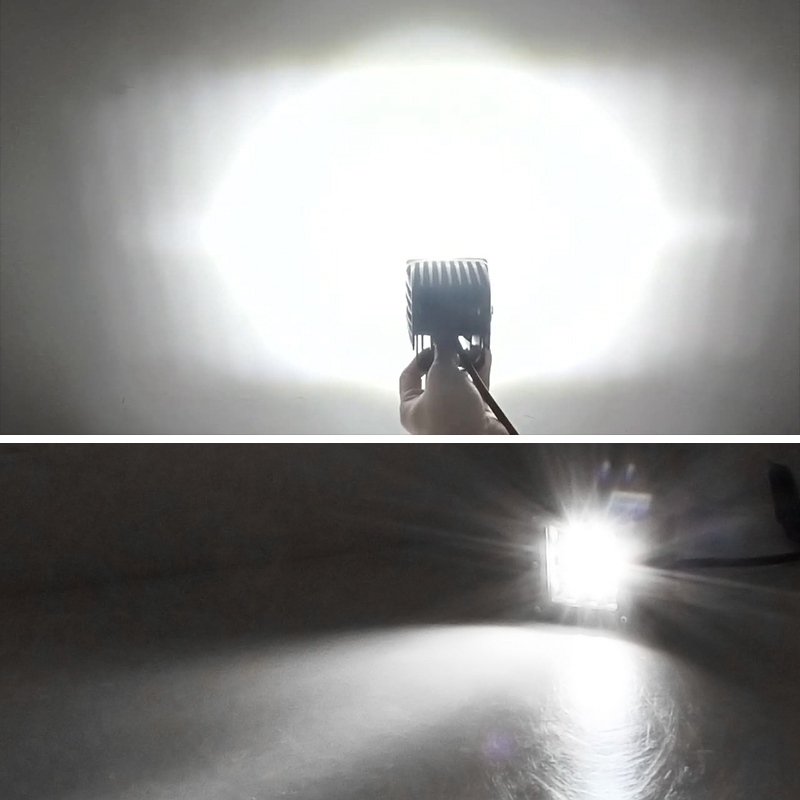
The persistent, costly misconception in lighting upgrades is relying on wattage as a proxy for brightness. This habit, left over from the halogen era, leads to suboptimal purchasing decisions. Procuring fixtures based on inflated spec sheets often results in inefficient lights that draw excess power, overheat prematurely, cause electromagnetic interference (EMI) with communication equipment, or fail to deliver usable illumination on the job site or trail. Shifting the evaluation criteria from power consumption (watts) to actual light output (lumens), optical efficiency, and thermal management is mandatory. This shift is necessary for selecting an LED work light that delivers verifiable ROI, operational safety, and long-term durability.
Key Takeaways
Watts measure power draw, not brightness: High wattage in LEDs often indicates poor energy conversion, inefficient driver design, and excess heat generation rather than superior illumination.
Raw vs. Effective Lumens: Spec sheets frequently advertise "raw lumens" (theoretical mathematical maximums), but "effective lumens" (actual measured output after thermal, optical, and assembly losses) dictate real-world performance.
Luminous Efficacy is the true quality indicator: The ratio of lumens per watt reveals the engineering quality of the LED chips, circuit board design, and drivers.
Optics dictate utility: A lower-lumen light with precision Total Internal Reflection (TIR) optics will outperform a high-lumen light with poor reflectors in specific applications like distance spotting or wide-area flooding.
Electromagnetic Compatibility (EMC): High-quality LED fixtures must include EMI shielding (such as CISPR 25 compliance) to prevent radio and GPS interference on vehicles and heavy machinery.
The Core Problem: Why "Watts" is an Outdated Metric for an LED Work Light
Problem Framing
For decades, incandescent and halogen bulbs dominated the heavy equipment and automotive industries. During that era, power draw directly correlated with light output. A 100-watt halogen bulb was universally brighter than a 55-watt halogen bulb because the underlying technology relied on heating a tungsten filament until it glowed. You could safely use wattage as a reliable gauge for brightness. This ingrained the idea that more power equals more light. Mechanics and fleet managers built entire procurement strategies around wattage ratings.
The LED Paradigm Shift
Light Emitting Diodes decoupled power consumption from brightness, rendering the watt-to-brightness rule obsolete. Instead of burning a filament, LEDs generate light by passing an electrical current through a semiconductor. This process is highly efficient. Today, a highly engineered 40-watt LED can easily outshine a poorly constructed 100-watt LED. The focus must shift to how efficiently the fixture converts electrical energy into visible light.
The Cost of the Wattage Myth
Continuing to buy lights based on wattage carries significant operational penalties. First, it places unnecessary strain on vehicle alternators, batteries, and electrical systems. Second, high wattage in a poorly designed fixture translates directly into excessive thermal degradation of the LED emitter junction. This drastically shortens the lifespan of the unit. Finally, it results in wasted budget on inefficient, poorly engineered hardware that prioritizes high power consumption over actual optical output.
Driver Efficiency and Heat Loss
The internal driver circuitry determines how efficiently a light uses the power it draws. Cheap linear drivers burn off excess voltage as heat, inflating the wattage rating without producing additional light. In contrast, high-efficiency switching drivers optimize current delivery. They minimize thermal output and maximize the energy converted into visible light. High wattage often just means high heat loss.
Driver Type
Efficiency
Heat Generation
Impact on LED Lifespan
Linear Driver
Low (60-70%)
High (Burns excess voltage)
Severe degradation over time
Switching Driver
High (90%+)
Low (Optimized current)
Maximizes operational hours
Decoding Lumens: The True Measure of Light Output
Defining the Lumen
To evaluate modern lighting, you must look at lumens. A lumen is the technical measurement of the total quantity of visible light emitted by a source per unit of time, also known as luminous flux. It tells you exactly how much light the fixture produces, regardless of how much electrical power it consumes to generate that light. This is the baseline metric for any serious lighting evaluation.
Raw Lumens vs. Effective Lumens (The Spec Sheet Trap)
Manufacturers often use misleading metrics on spec sheets to make their products appear superior. Understanding the difference between raw and effective output prevents costly mistakes.
Raw lumens represent a mathematical calculation of maximum LED chip output under perfect, laboratory-cold conditions. This assumes a 25°C junction temperature and the chips being driven at maximum current. It is a theoretical number that no light achieves in the real world.
Effective lumens measure the actual, stabilized light output after the fixture has reached thermal equilibrium. This metric accounts for thermal throttling (heat loss), housing design constraints, and optical inefficiencies like lens or reflector loss. When evaluating options, always look for LM-79 testing reports from independent laboratories to verify the stated effective lumen data.
Luminous Efficacy (Lumens Per Watt)
Luminous efficacy is the ultimate indicator of a fixture's engineering quality. You calculate efficacy by dividing the total lumens by the total watts. This ratio determines the actual efficiency of the fixture.
In modern industrial and automotive lighting, a good efficacy ratio sits between 80 and 100 lumens per watt. An exceptional fixture will deliver 120 or more lumens per watt. High efficacy means the light produces brilliant illumination while keeping electrical draw and operating temperatures low.
Beyond Lumens: Evaluation Dimensions for Usable Light
Lux and Candela (Measuring Light at a Distance)
While lumens measure total light output, they do not tell you how well that light is projected. Lux and candela measure light intensity on a specific surface area at a specific distance. Because of the Inverse-Square Law, light intensity drops exponentially as distance increases. High lumens do not guarantee high lux if the optics are poorly engineered and scatter the light uselessly into the sky or immediate foreground. You need targeted intensity to see obstacles at highway speeds or across a large quarry.
Optical Systems: Reflectors vs. TIR Lenses
The method used to focus the light dictates its utility in the field.
Reflector optics represent a traditional design. They bounce light off a mirrored surface to project it forward. However, they are prone to uncontrolled stray light, glare, and high optical loss, sometimes losing up to 30% of the generated light.
Total Internal Reflection (TIR) lenses capture and direct almost all light rays emitted by the LED. They deliver much higher optical efficiency, often up to 90%, and provide exceptionally tight beam control. This makes TIR optics vastly superior for focused applications.
Color Temperature (Kelvin) and Visual Fatigue
Color temperature, measured in Kelvin (K), impacts both visibility and operator fatigue. The standard spectrum ranges from 4000K to 6500K.
Lights rated at 6000K and above emit a cool, bluish-white light. While this appears brighter to the naked eye, it causes higher glare, severe backscatter in airborne particulates, and rapid eye strain. Conversely, a 4000K to 5000K color temperature provides a warmer, more natural light. This range offers better depth perception, accurate contrast, and significantly reduces visual fatigue when operating in dust, fog, rain, or snow.
Color Temperature
Visual Appearance
Best Application Environment
Fatigue Level
4000K
Warm White / Yellowish
Heavy dust, fog, snow, rain
Very Low
5000K
Pure Daylight White
General off-road, construction sites
Low
6000K+
Cool White / Bluish
Clear nights, marine applications
High (Causes glare/backscatter)
Color Rendering Index (CRI)
The Color Rendering Index (CRI) measures how accurately a light source reveals the true colors of objects compared to natural sunlight. For detail-oriented tasks like electrical wiring, mechanical repairs, or reading color-coded schematics, accurate color identification is critical. We recommend selecting fixtures with a minimum CRI of 80+ for any demanding work site application.
Solution Categories: Evaluating Beam Patterns for Specific Applications
Flood Lights vs. Scene Lights
Flood and scene lights are engineered for wide-angle dispersion, typically featuring a 60-degree to 120-degree spread. They prioritize illuminating a massive area immediately surrounding the fixture rather than projecting light into the distance.
These beam patterns are best suited for slow-moving heavy machinery, stationary construction job sites, and immediate perimeter illumination where broad, even visibility is required over a short range. Excavators and skid steers benefit heavily from this pattern.
LED Offroad Spot Lights
Spot lights are designed with a narrow, highly focused beam pattern, usually ranging from an 8-degree to 20-degree spot. The goal is extreme distance projection, punching a concentrated tunnel of light far down the trail or site.
LED offroad spot lights are essential for high-speed night navigation, long-range hazard detection, and marine search operations where seeing obstacles hundreds of yards away is mandatory.
Combo Beams
Combo beams utilize a hybrid approach, placing spot optics in the center of the fixture and flood optics on the outer edges. This provides a mix of distance and width. While highly versatile for general use, combo beams represent a conceptual trade-off. You sacrifice the specialized, extreme distance of a dedicated spot and the massive, even spread of a dedicated flood for a middle-ground solution.
Form Factor and Scalability: Selecting the Right LED Work Light
Heavy Machinery and Industrial Sites
Industrial applications demand massive light output and extreme durability. Heavy machinery requires large-scale, multi-array light bars, heavy-duty bracketry to withstand constant vibration, and ultra-durable housings that can survive impacts from debris and harsh chemical washdowns. Mining dump trucks and forestry forwarders require these robust setups.
LED Work Lights for Off-Road Vehicles
Mounting lights on trucks, ATVs, and overland rigs requires balancing several competing factors. You must consider aerodynamic drag, mounting constraints on bumpers and roof racks, wind noise at highway speeds, and vibration resistance. LED work lights for off-road vehicles must be rugged enough to handle washboard roads while maintaining a low enough profile to avoid snagging on branches.
The Case for the 3 Inch LED Work Light
Compact pod lights, often referred to as cube lights, offer immense utility due to their small footprint. However, engineering a high-performance 3 Inch LED Work Light presents a significant challenge: achieving high effective lumens while managing thermal dissipation in a severely restricted housing.
When engineered correctly with high-quality heat sinks and TIR optics, these compact lights are ideal for ditch lights, A-pillar mounts, reverse lights, and tight-clearance mounting on aftermarket bumpers where larger bars simply will not fit.
Implementation Risks, Hardware Trade-offs, and Testing Standards
Thermal Management (The Enemy of LEDs)
Heat is the primary enemy of LED technology. Inadequate thermal management degrades LED lifespan, shifts the color temperature over time, and causes severe lumen depreciation. Evaluating the heat sink design is critical. Extruded aluminum generally dissipates heat better than cast aluminum due to increased surface area. Furthermore, high-quality lights utilize active thermal throttling circuitry that automatically reduces power draw if the fixture gets too hot, protecting the diodes from permanent damage.
Ingress Protection (IP Ratings) and Environmental Durability
Work lights must survive brutal environments. IP ratings define a fixture's resistance to dust and water. IP67 means the light can withstand temporary submersion. IP68 guarantees continuous submersion. IP69K is the highest standard, indicating resistance to high-pressure, high-temperature washdowns. Additionally, look for pressure-equalizing breathers, like Gore-Tex vents. These prevent condensation from forming behind the lens during rapid temperature transitions, such as plunging a hot light into a cold river crossing.
Cheap LED drivers act like miniature radio transmitters, causing severe static and interfering with VHF, UHF, or GPS signals. This is a critical safety issue on job sites and remote trails. Always verify that the fixture includes proper EMI shielding. The standard to look for is CISPR 25 Class 3 or Class 5 compliance, which guarantees the light will not disrupt sensitive communication equipment.
Vibration and Mechanical Shock Standards
Mounting a light to a vibrating diesel engine or a rigid off-road suspension subjects it to immense mechanical stress. Look for products that meet rigorous testing standards like SAE J575 for vibration and moisture resistance, or MIL-STD-810G, a military durability standard for shock and environmental resistance. This ensures the internal circuitry will not shake apart over time.
Electrical System Load and Wiring Constraints
Before installing high-output lighting, you must mitigate electrical risks. Calculate the total amp draw to ensure the vehicle or equipment's alternator or stator can support the new lighting array. Using appropriately gauged wiring harnesses made of pure AWG copper rather than cheap Copper Clad Aluminum (CCA) is mandatory. Pair this with high-quality Deutsch (DT/DTM) waterproof connectors and properly rated relay installations to prevent electrical fires and voltage drops.
Conclusion
Audit the current electrical capacity of your vehicle or machinery to determine your maximum safe amp draw before purchasing any fixtures.
Define the exact operational environment to choose between spot, flood, or combo beam patterns based on speed and distance requirements.
Request detailed photometric files (.IES format) or effective lumen data from shortlisted manufacturers to verify actual light output.
Verify the presence of high-quality wiring components, including AWG copper wire and Deutsch connectors, to ensure a safe installation.
FAQ
Q: How many lumens do I need for a good LED work light?
A: The requirement depends entirely on the application. For close-range tasks or small 3-inch pod lights, 1,500 to 3,000 effective lumens are sufficient. For heavy equipment, agricultural machinery, or high-speed off-road use, you will need 5,000 to 10,000+ effective lumens to ensure safe visibility.
Q: Are higher watts better for LED work lights?
A: No. Higher watts in poorly engineered LEDs indicate low efficiency, high heat generation, and potential electrical system overload rather than superior light output. Always evaluate lights based on luminous efficacy (lumens per watt) rather than raw power consumption.
Q: What is the difference between raw lumens and effective lumens?
A: Raw lumens are theoretical maximums calculated from chip datasheets under perfect, cold laboratory conditions. Effective lumens represent the actual, stabilized, measured light output after accounting for optical, thermal, and electrical assembly losses in the real world.
Q: What is the best beam pattern for LED offroad spot lights?
A: The best beam pattern for spotting is a narrow degree pattern, typically between 8 and 20 degrees. When paired with Total Internal Reflection (TIR) optics, this configuration provides maximum forward projection and minimal light spill, ideal for high speeds.
Q: Can an LED work light drain my vehicle's battery?
A: Yes, if used improperly. You must calculate the total amp draw and ensure the lights are run primarily while the engine and alternator are active. Using high-quality relays and appropriately fused wiring harnesses is critical to prevent parasitic draw and battery depletion.
Shenzhen Creek Optoelectronic Technologies Co., Ltd. produce Car LED work lights, off-road LED light bar, forklift safety lights, agricultural tractor work lights, LED strobe and beacon lights, car radios, etc.