A wiring harness in your car joins electrical parts together. It helps signals and power move without problems. You rely on this system to drive safely. It connects important things like throttle control, steering, and braking. Modern cars need good wiring harnesses for their complex electronics. Picking a quality wiring harness helps your car work better and safer. It is important for advanced driver-assistance features too.
Key Takeaways
A wiring harness links all the electrical parts in your car. It helps them work well together.
You should check your wiring harness often for any damage. This can stop expensive repairs and keep you safe.
Picking a good wiring harness makes your car work better. It also helps your car be more reliable.
Wiring harnesses are needed for safety features to work right. These include airbags and anti-lock brakes.
Getting a better wiring harness can help save fuel. It can also make driving feel better overall.
Wiring Harness Basics
What Is a Wiring Harness?
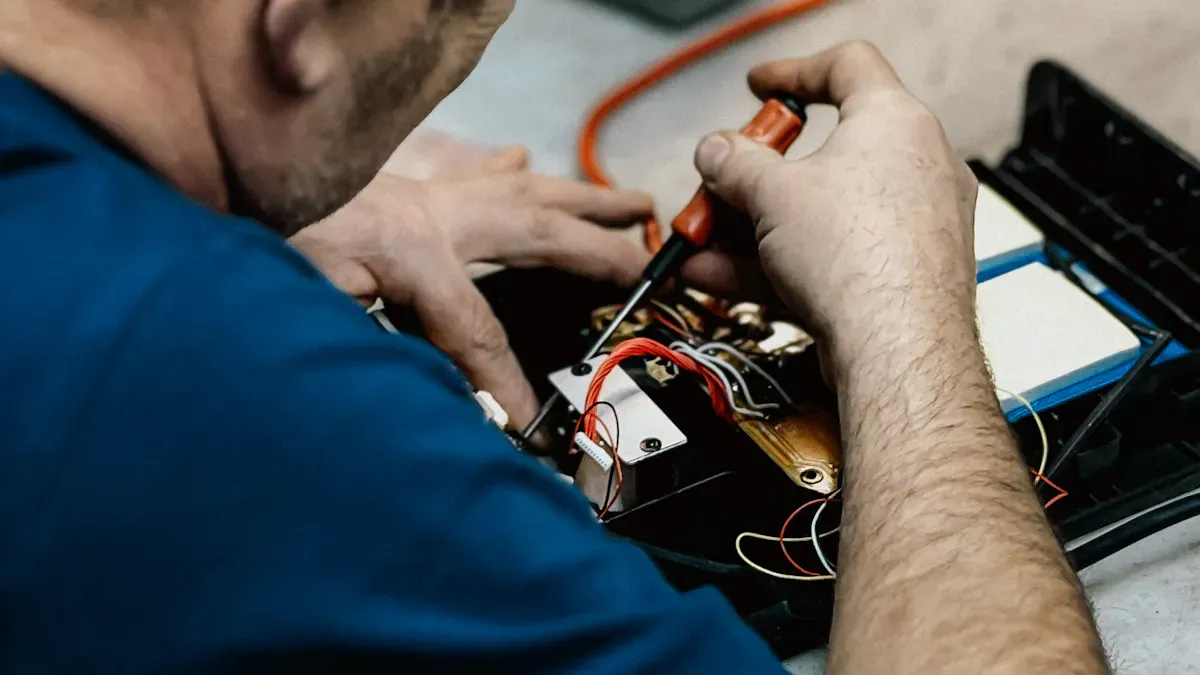
When you look under the hood or behind the dashboard, you see a wiring harness. In cars, a wiring harness is a group of wires that connects all the electrical parts. These wires link things like sensors, batteries, actuators, and control units. You need wiring harnesses to send power and information for many car functions. When you use the throttle, turn on the lights, or play music, the wire harness helps everything work together.
A normal car wire harness has a few main parts:
Engine wiring harness: Connects engine parts and sends power and signals.
Body wiring harness: Links things on the car body, like lights and speakers.
Instrument wiring harness: Connects the dashboard and controls, sending signals and lights.
Lighting harness: Connects the headlights and taillights.
Front and rear windshield wiring harness: Links things on the windshields, like wipers and sensors.
Seat wiring harness: Connects seat parts, so seats can heat or cool.
Wire harnesses are found all over your car. They make sure every system works as it should.
How Wiring Harnesses Work
Wiring harnesses are like your car’s nervous system. They connect electrical parts and systems, so power and signals move easily. When you press a button or turn a knob, the wiring harness sends low voltage signals and power to the right spot. This includes commands from sensors and signals to actuators.
Wiring harnesses link electrical parts in your car, making power delivery easy.
They send signals and power, including commands and sensor outputs.
Good design keeps signals clean by blocking noise and interference.
Some harnesses do more than one job, saving space and making things simpler.
Universal wire harnesses help cars work better and cost less by combining jobs.
Wiring harnesses help your car run smoothly and reliably. If you add new features to your car, you might need a new wiring harness to handle them.
Why Wiring Harnesses Matter
Wiring harnesses are important for safety, reliability, and performance. You need them to connect the engine, lights, and entertainment systems. Without a main wiring harness, your car would not work right.
Failure Point | Impact on Vehicle Operation |
Environmental Exposure | Damages insulation, making it brittle and cracked. |
Mechanical Stress | Wears out wires, causing things to work on and off. |
Chemical Contamination | Causes rust, which can make circuits stop working. |
Moisture Intrusion | Breaks seals, leading to rust and failures. |
Road Salt | Makes underbody harnesses wear out faster. |
Fluid Leaks | Damages insulation, causing failures. |
Vibration | Wears out wires at bends, causing failures. |
Mileage Range | Most damage happens between 80,000 and 120,000 miles. |
If your wiring harness is bad, parts may work poorly, stop working sometimes, or fail completely. Rust makes wires less efficient. Voltage drops can make parts act strangely. Bad rust can break circuits, so some things stop working.
Looking at your wires can help you find early problems, like shiny spots or frayed covers. You can fix things before they get worse.
Wiring harnesses carry power and signals through your car. You need them for power, signals, and to keep your car working well. Good harness design protects against damage and stress. Taking care of your wire harness keeps your car safe and reliable.
Tip: Check your wire harnesses often for damage or wear. Finding problems early saves money and keeps your car running well.
Functions and Importance of Automotive Wire Harness
Power and Signal Distribution
Your car’s wiring harness keeps everything working well. It links all the electrical parts in your car. It connects things like lights, sensors, and your infotainment system. The wiring harness sends power and signals where they need to go. This network lets different systems talk to each other.
A wiring harness has insulated wires, connectors, and terminals. These parts work together to give each part the right power and information. For example, when you turn on headlights, the harness sends power from the battery to the lights. It also carries signals from sensors to the car’s computer. This helps your car react fast to what you do.
Here is a table showing common wire sizes and their uses in automotive wiring harnesses:
Wire Gauge | Typical Uses | Current Capacity |
22 AWG and 20 AWG | Sensor and Signal Wiring (e.g., CAN bus) | 3-7 amps |
18 AWG and 16 AWG | Lighting and Accessory Circuits | 10-16 amps |
14 AWG and 12 AWG | Power Components (e.g., fuel pumps) | 20-32 amps |
10 AWG and Lower | High-Current Systems (e.g., starter motor) | 40+ amps |
Different wires do different jobs. This helps your car use energy well and keeps everything working together.
Safety and Reliability in Vehicles
A wiring harness does more than connect parts. It helps keep you safe. You need it for things like airbags and anti-lock brakes. These systems need steady power and signals to work right. If the wiring harness breaks, safety features might not work when you need them.
The wiring harness makes sure airbags and ABS get the power and signals they need.
It helps stop electrical failures and short circuits. This lowers the risk of fires or problems.
Sensor wires send real-time data to the car’s computer. This matters for ABS during sudden stops.
A strong harness keeps safety features working, even in tough conditions.
Automotive wiring harnesses must meet strict standards for quality and strength. Here are some common standards:
Standard | Scope | Importance |
IATF 16949 | Quality Management | Sets the industry benchmark |
ISO 6722 | Insulation Specifications | Ensures thermal and mechanical strength |
IEC 60228 | Conductor Classification | Defines wire types |
IPC/WHMA-A-620 | Assembly Criteria | Governs crimping and soldering |
ISO 19642 | High-Voltage EV Systems | Regulates cable performance |
SAE J1128 | Low-Voltage Wiring | Used in body and lighting circuits |
ISO 16750-4 | Environmental Testing | Simulates vibration and stress |
UL/CE/RoHS | Safety & Materials | Ensures global and eco compliance |
You can trust your car’s safety harnesses because they follow these standards. This gives you peace of mind every time you drive.
Tip: Always check your wiring harness for signs of wear. Early repairs can stop bigger problems and keep you safe.
A good wiring harness helps your car perform better. It makes sure power gets to every part without waste. When your car uses energy well, you get better gas mileage and lower emissions. You also get smoother driving and faster response from your car’s systems.
A well-designed harness cuts energy loss. This means your car uses less fuel.
Lightweight harness materials can make your car lighter. This helps with speed and handling.
The way the harness is laid out affects how well your car works. Fewer wires and smart design mean less weight and better efficiency.
Here is a table showing how wiring harness upgrades can improve your car:
Impact | Measurement |
Improved Fuel Economy | 2-4% increase in fuel efficiency |
Enhanced Power Delivery | 5-10% more horsepower |
Increased Reliability | Consistent 5-volt reference signal |
Better Sensor Signal Integrity | Less voltage drop and noise |
Torque Increase | 15 lb-ft more torque |
Horsepower Increase | 12 more horsepower |
Reduced Turbo Spool Time | 250 RPM faster response |
You get reliable performance and better safety with the right wiring harness. Upgrading or taking care of your harness can change how your car feels and drives.
Types of Wire Harnesses in Cars
Engine Wire Harness
The engine wiring harness helps your car run well. It connects important parts like the alternator, ignition coils, injectors, and sensors to the engine control unit. This harness sends power and signals for things like burning fuel and controlling emissions. The wires are made from materials that can handle heat and shaking. This makes the harness strong in the tough engine area. If you want your car to work its best, you need a good engine wiring harness.
Chassis Wire Harness
The chassis wire harness helps keep your car safe and steady. It connects the brakes and suspension to the rest of your car. This harness sends power and messages to different parts. It helps anti-lock brakes and driver-assistance systems work right. The chassis wire harness lets sensors and control units share information. Because of this harness, your car handles better and is safer to drive.
Body Wire Harness
You use the body wiring harness every day, even if you do not notice it. It controls many things inside your car. Here are some examples:
HVAC systems
Infotainment units
Interior lighting
Power seating
The body wiring harness links these features to the main electrical system. You get comfort and convenience because this harness keeps everything working. The instrument wiring harness and seat wiring harness are also part of the car wiring loom. These harnesses help control the dashboard and seat features.
Specialized Wire Harnesses
Specialized wire harnesses are used in electric and hybrid cars. These harnesses do special jobs and support advanced features. Look at this table for examples:
Type of Harness | Description |
Power and control harnesses | Manage electrical power for motors and controllers. |
Signal harnesses | Transmit signals in control systems, using shielded wires to reduce interference. |
Sensor harnesses | Connect sensors and controllers, often using twisted wires for clear signals. |
Data harnesses | Support high-speed communication with shielded cable assemblies for stable data transfer. |
Sometimes you need custom automotive wire harnesses or custom wire harnesses for upgrades. Special wire harness solutions help fit your car’s needs. You also find cockpit wiring harness and instrument wiring harness in new cars. These harnesses make sure your dashboard and controls work right.
Tip: If you add new features or upgrade your car, pick the right wire harness for your needs. This keeps your car safe and working well.
Common Applications for Wiring Harnesses
Wiring harnesses are important in many car systems. You find them in lights, towing, and when you add new things to your car. Picking the right harness helps your car stay safe and work well. Here are some ways wiring harnesses are used.
Lighting Systems and Accessories
You use your car’s lights all the time. A lighting harness links headlights, taillights, and inside lights. This makes sure each light gets the right power and signal. Some harnesses, like the CREK Auto Relay Wire Automotive Trailer Headlight Light Bar Wiring Harness, fit well and give steady power. You can use these harnesses for both factory lights and new lights you add.
Here is a table that shows how wiring harnesses help with lighting:
Feature | Description |
Precision Fit | Headlight harnesses that fit right and give steady power and signals. |
Application | Harnesses for headlights, taillights, and inside lights. |
Environment | Fog light harnesses with covers for tough road conditions. |
A good lighting harness keeps your lights bright and working, even in bad weather.
Trailer and Towing Solutions
If you pull a trailer, you need a strong wiring harness. Special harnesses make it easy to hook up your trailer’s lights and signals. The CREK Auto Relay Wire Automotive Trailer Headlight Light Bar Wiring Harness is a good example. It gives a safe connection and works with many trailers.
Benefit | Description |
Convenience | Easy to set up with one plug-in harness. |
Safety | Safe connection helps stop wires from coming loose. |
Compatibility | Works with many trailer types, so you do not need lots of harnesses. |
Durability | Made to last, even if you use it a lot. |
Value | Makes towing easier and more dependable. |
A good harness helps you feel safe when you tow a trailer.
Upgrades and Aftermarket Uses
You might want to add new things to your car. Aftermarket wiring harnesses make this easy. These harnesses have labeled wires and ready-to-use circuits. You can put in new lights, sound systems, or other things without getting mixed up. New harnesses also have fuse protection to keep you safe. The CREK harness is a smart pick for upgrades because it is simple to put in and works with many car accessories.
Tip: Always pick a harness that fits your car’s needs. The right harness makes your car safer and work better.
Materials and Benefits of Automotive Wire Harnesses
High-Quality Materials (e.g., Copper, Waterproofing)
You want your wiring harness to work well for a long time. Manufacturers use copper because it carries electricity very well. Each wire has insulation to protect it from heat and rubbing. Insulation also blocks electrical noise. Waterproofing is important if your car faces rain or mud. Connectors with high ingress protection, like IP67, keep out water and dust. Thermoplastics and metals that do not rust help the harness last in tough places. Strain relief designs stop wires from breaking when bent or pulled.
Feature | Description |
Ingress Protection (IP) | Connectors with higher IP ratings (like IP67) keep out water and dust. |
Material Durability | Thermoplastics and rust-proof metals help the harness last longer. |
Strain Relief Design | These features protect wires from damage caused by bending or pulling. |
Insulation keeps wires safe and stops short circuits. Your car works well even in bad weather.
Durability and Longevity
A harness with good insulation and waterproofing can last many years. Most times, you will not need to replace it. Manufacturers test harnesses in different ways. They use accelerated aging to see how it holds up over time. Dielectric loss factor testing checks if insulation still works well. Non-destructive testing lets experts check for aging without breaking the harness.
Method | Description |
Accelerated Aging Experiments | Tests how the harness ages and works over time. |
Dielectric Loss Factor Testing | Checks how much energy is lost in the insulation. |
Non-destructive Testing | Lets experts check for aging without hurting the harness. |
Insulation helps protect the harness from heat and shaking. A good harness will work until your car is no longer used.
Ease of Installation and Maintenance
You want installing the harness to be easy. Good materials like GXL and TXL wiring resist heat and rubbing. Flexible harnesses fit in many places. Circuit count helps you pick the right harness for your car. Some harnesses let you move the fuse box for easy access.
Good materials make putting in the harness easier.
Flexible harnesses fit many cars.
Circuit count helps you choose the best harness.
"Take your time! Wiring takes patience. Lay out the harness, plan the route, and work one wire at a time."
Insulation makes it easy to find and fix damage. You can repair problems before they get worse. With good insulation, you spend less time fixing and more time driving.
A wiring harness links your car’s main systems. You need it for safety, good performance, and comfort. It helps your car work well and keeps you safe while driving.
"A wire harness is like the circulatory system in technology. It sends electrical power and information everywhere in a system."
Check your harnesses regularly. This easy step keeps your car ready for every trip.
FAQ
What does a wiring harness do in your car?
A wiring harness connects electrical parts. You use it to send power and signals. It keeps your car safe and helps systems work together in automotive and transportation settings.
How can you tell if your wiring harness needs replacement?
Look for frayed wires, broken insulation, or flickering lights. You may notice strange sounds or parts that stop working. These signs mean you should check your wiring harness.
Can you install a wiring harness yourself?
You can install a wiring harness if you follow instructions. Use basic tools and take your time. Many harnesses come with clear guides. Ask for help if you feel unsure.
Why is waterproofing important for wiring harnesses?
Waterproofing protects wires from moisture. You keep your car safe during rain or mud. It prevents rust and keeps your wiring harness working well in transportation environments.
What makes the CREK Auto Relay Wire Harness a good choice?
You get high-quality copper, waterproof design, and easy installation. The harness fits many lighting systems. It works well for upgrades and towing solutions.


