Construction sites present a brutally unforgiving reality for heavy machinery. You deal daily against aggressive vibration, blinding silica dust, flying gravel, and strict regulatory oversight. A failed light is never just a minor inconvenience. It instantly becomes a severe safety hazard and a massive liability risk. If an accident occurs in low visibility, it often leads to costly OSHA citations. You might also face devastating insurance claims. Unfortunately, standard consumer-grade LEDs fail rapidly under extreme off-road punishment. They simply cannot withstand harsh winter road salt or relentless mechanical shaking. Commercial operators desperately need purpose-built equipment to survive these harsh environments. We created this comprehensive guide to break down exactly how you should evaluate commercial-grade warning lighting. You will discover the critical differences in legal compliance standards, complex technical specifications, and smart setups for diverse vehicle types. By applying these practical insights, you can ensure maximum fleet safety. You will learn to protect your crew properly without second-guessing your safety gear.
Key Takeaways
Compliance dictates the purchase: SAE Class 1 is mandatory for highway speeds (45+ mph), while Class 2 and 3 serve lower-speed or private-site needs.
Penetration over brightness: Evaluate lights based on Candela (focused beam distance) rather than Lumens (overall light spread).
Environmental sealing is non-negotiable: Minimum IP67 ratings are required, with IP69K and gel-encapsulated electronics highly recommended for winter salt and high-pressure washing.
Form follows function: Match the light style (mini light bars, surface mounts, hideaways) to the vehicle's structural limitations (e.g., ROPS cages vs. flat roofs).
The Business Case for Commercial-Grade Lighting
Construction environments inherently breed danger. Your site demands proactive risk management at all times. According to stringent OSHA guidelines, poor visibility remains a primary leading cause of fatal site accidents. If a worker cannot clearly see moving machinery, catastrophic collisions happen within seconds. Proper illumination serves as your most critical line of defense. It actively protects your organization against devastating liability claims. Installing high-quality warning illumination often qualifies commercial fleets for substantial insurance discounts. Commercial insurers strongly prefer clients who take proactive, verifiable safety measures.
You must also strictly prioritize regulatory compliance. State Departments of Transportation (DOT) ruthlessly monitor highway work zones. A single failed safety inspection can immediately sideline your heavy equipment. You simply cannot afford arbitrary downtime caused by state DOT interventions. Fleets equipped safely breeze through weigh stations. They effortlessly pass surprise site checks. Maintaining compliance keeps your projects moving forward smoothly.
Business Impact Chart: Risks vs. Lighting Solutions
Operational Risk | Regulatory & Financial Impact | Lighting Solution Strategy |
Low visibility in active highway traffic | DOT fines, forced site shutdowns | Deploy SAE Class 1 certified lighting |
Reversing machinery in blind spots | OSHA safety violations, liability lawsuits | Install rear-facing surface mount strobes |
Frequent hardware failure from off-road vibration | Continuous replacement costs, project delays | Upgrade to solid-state, fully potted electronics |
Navigating SAE Ratings & Legal Requirements
Standards separate professional gear from cheap imports. Selecting an LED Warning Light is not about subjective brightness. You must meet standardized legal visibility metrics tested under direct sunlight. The Society of Automotive Engineers (SAE) sets these critical performance benchmarks. Let us break down the exact ratings you need.
SAE Class 1: These premium units project intensely bright light visible from 500 feet or more. You absolutely need Class 1 certification for vehicles operating on high-speed roadways. If your highway dump trucks travel above 45 mph, regulators mandate this level. It provides approaching motorists enough reaction time to brake safely.
SAE Class 2: These lights remain clearly visible from 300 to 500 feet away. Traffic authorities approve Class 2 units for lower-speed public road work. They fit perfectly on local utility vehicles. We often see them utilized heavily in municipal maintenance operations.
SAE Class 3: You can easily see these units from 150 to 300 feet away. Authorities restrict Class 3 lighting strictly to private property. Use them exclusively for closed construction sites. They also work exceptionally well for indoor warehouse equipment like specialized forklifts.
State-Level Variations: Always verify your local state restrictions thoroughly. Some states enforce highly specific color combinations. While amber serves as the universal standard, certain jurisdictions restrict secondary colors. You must check local laws regarding clear, white, or red flashing configurations.
Best Practice: Always document your SAE compliance certificates inside your fleet maintenance logs. DOT inspectors frequently ask for hard proof of compliance during roadside audits.
Common Mistake: Buying cheap, unmarked lights online poses huge risks. If the plastic lens lacks a physical SAE stamp, authorities treat it as non-compliant. You will fail inspections instantly.
Core Types of LED Strobe Lights for Trucks & Equipment
Different vehicles require specific form factors. You cannot apply a one-size-fits-all approach for heavy fleet setups. We need to explore the primary configurations available today.
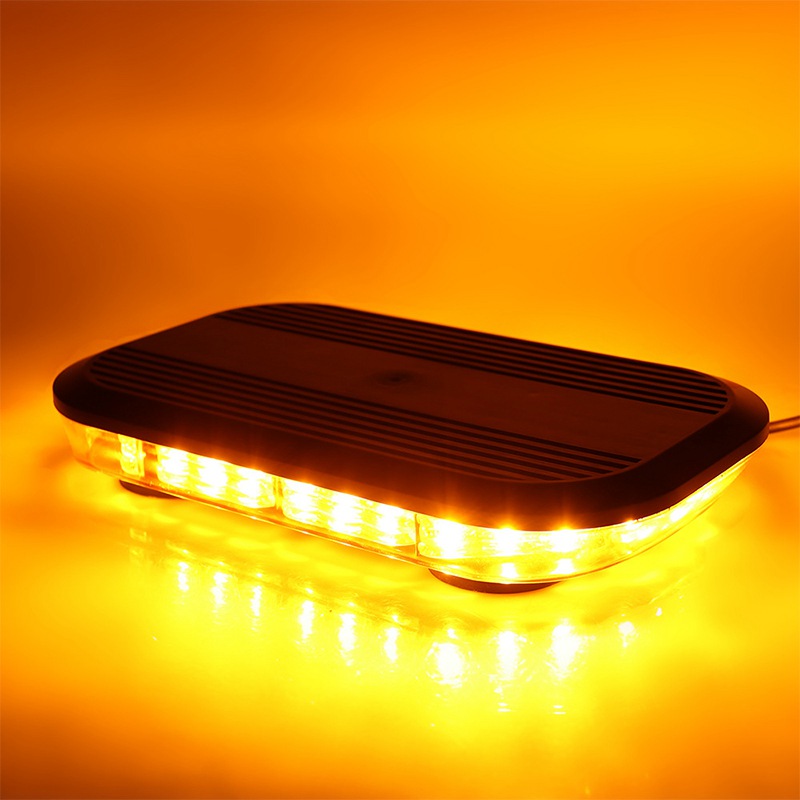
Full-Size and Mini Light Bars:
These units provide critical, uninterrupted 360-degree visibility. Fleet managers highly favor mini light bars for standard pickup truck roofs. A massive full-size bar is often unnecessary and bulky for a regular cab. Modern miniature bars utilize extremely strong magnetic mounts. They also offer clever no-drill mounting platforms. This design fully preserves your vehicle's structural integrity. It prevents unwanted roof leaks over time.
Surface and Grille Mounts:
These deliver compact, highly intense directional flashes. They work flawlessly for flat vehicle surfaces, front grilles, or heavy steel bumpers. Manufacturers use specialized heavy-duty polycarbonate housings here. This robust plastic material aggressively protects delicate internal diodes against direct rock strikes. We recommend mounting them in pairs for maximum visual impact.
Hide-Away and Auto Flasher Kits:
These unique kits utilize your vehicle's existing factory headlight or taillight housings. They remain completely invisible when powered off. This feature is perfect for fleet vehicles requiring stealth during normal highway transit. Once engaged on an active site, they produce massive light output. They flash in synchronized patterns to capture immediate attention.
Traffic Advisors:
You install these sequential directional lights on the vehicle's rear. They remain absolutely essential for complex highway lane closures. They effectively redirect active traffic flow safely around a bustling worksite. They actively prevent devastating rear-end collisions from distracted drivers. When looking for high-quality LED strobe lights for trucks, incorporating rear advisors undeniably saves lives.
Best Practice: When installing hide-away kits, seal the drilled entry holes completely. Use high-quality silicone to prevent moisture from ruining your factory headlight housings.
Common Mistake: Relying purely on magnetic mounts for highway driving is dangerous. Always use permanent bolt-on brackets for vehicles regularly exceeding 60 mph. High winds can easily dislodge heavy magnetic bases.
Essential Evaluation Metrics: Separating Pro from Consumer Grade
You must know how to separate professional lighting from cheap consumer alternatives. We evaluate specific technical metrics to determine true reliability.
Candela versus Lumens:
Construction operations require exceptionally high Candela ratings. Candela measures tightly focused directional intensity. This focused energy pierces thick dust, dense morning fog, and heavy rain. Lumens merely measure overall, unfocused light spread. A light projecting high lumens but low Candela will look incredibly bright up close. However, it will completely disappear at 100 feet. You need beam distance, not a wide flood effect.
IP Ratings and Weather Resistance:
Environmental sealing strictly determines the operational lifespan of your gear.
IP67: This serves as your minimum viable operational standard. It strictly ensures the housing remains dust-tight. It guarantees survival during temporary water immersion.
IP69K: You require this elite rating for all heavy earth-moving machinery. It effortlessly withstands high-temperature, high-pressure washing. Crews commonly use aggressive power washing to remove thick, hardened mud.
Encapsulation: Always inspect the internal circuitry protection. Look for industrial-grade epoxy or gel-like potting inside the primary housing. This chemical barrier completely blocks moisture penetration. It stops aggressive winter road salt from corroding solder joints. When hot components cool down, they pull a vacuum. Without proper potting, the housing sucks in moist air, causing internal condensation. Full encapsulation stops this physics problem entirely.
Vibration Mitigation:
Heavy equipment generates violently destructive vibrations. Excavators, graders, and dozers require heavily reinforced circuitry. Solid-state technology handles this continuous off-road rattling beautifully. It operates perfectly without breaking delicate internal connections. Avoid cheap lights relying on standard wire bonds. They will snap within weeks.
Electrical Compatibility:
Always ensure the product voltage flawlessly matches your specific equipment. Light-duty support trucks typically run on standard 12V systems. Conversely, many older or heavy-duty excavators operate on robust 24V electrical systems. Installing a 12V light on a 24V machine will instantly fry the delicate circuit board.
Technical Specification Comparison
Metric | Consumer-Grade Gear | Professional Commercial-Grade |
Visibility Metric | Focuses purely on high Lumens | Optimized for high Candela output |
Water Resistance | IP65 (Splash proof only) | IP67 or IP69K (Submersible & pressure-washable) |
Circuitry Protection | Bare exposed boards | Fully potted epoxy/gel encapsulation |
Voltage Handling | Fixed 12V only | Multi-voltage capable (12V/24V) |
Best Practice: Specify dual-voltage (12V/24V) models when purchasing stock for a mixed fleet. This smart inventory strategy prevents accidental voltage mismatch during emergency field repairs.
Common Mistake: Confusing IP65 with IP67. IP65 merely resists low-pressure water jets. IP67 survives actual immersion. IP65 lights will flood and fail during torrential downpours.
Strategic Installation by Construction Vehicle Type
Installation placement is just as important as the hardware itself. You must tailor your strategy directly to the machine's distinct physical shape. Proper wiring routing ensures long-term survival.
Dump Trucks and Haulers:
These massive vehicles require high-mounted Class 1 light systems. The primary light must sit high enough to clear the structural cab shield. Otherwise, the shield entirely blocks the warning signal from the rear. You must tightly combine this roof setup with heavy-duty surface mount strobes. Mount these securely on the rear tailgate. This critical rear placement proactively protects against deadly reversing blind spots.
Excavators and Loaders:
Traditional roof installations frequently fail on these specific machines. Thick Roll-Over Protective Structures (ROPS) severely hinder standard top mounting options. Furthermore, low-hanging tree branches easily rip off roof-mounted bars. The absolute best strategy involves mounting four to six compact surface-mount LEDs. You position them strategically around the lower cab sides and massive rear counterweight. This clever, low-profile layout creates an unbroken 360-degree warning halo. Ensure you route all wiring safely away from articulating hydraulic pinch points.
Utility and Service Trucks:
These highly versatile vehicles benefit immensely from hybrid combination setups. You should place a low-profile mini bar directly on the cab roof. Next, install highly directional grille mounts. These help clear forward intersections quickly during urgent dispatch calls. Finally, bolt sequential traffic advisors securely on the utility body rear. This explicitly controls passing traffic while technicians work just inches from the busy highway.
Conclusion
Upgrading to professional-grade LED Strobe Lights is a critically necessary investment. It directly improves active site safety. It maximizes expensive operational uptime. Most importantly, it provides crucial legal protection against civil lawsuits. You simply cannot afford to cut corners on fleet visibility.
Take action today by following these straightforward steps:
Audit your current fleet's SAE compliance immediately.
Check your primary operational speeds to determine your specific Class 1 versus Class 2 legal needs.
Source specialized lights backed by substantial multi-year warranties. Look for three to five years of comprehensive coverage.
Verify proven IP67 or IP69K ratings before submitting any substantial purchase order.
FAQ
Q: What is the difference between a standard LED and an emergency LED warning light?
A: Emergency strobes feature highly specialized custom optics, like TIR or linear lenses. These specific lenses explicitly project light over incredibly long distances. They also include integrated flash patterns. Manufacturers build them using ruggedized, fully encapsulated housings. Engineers design them specifically to endure heavy impacts and severe weather conditions. Standard LEDs only provide basic, unfocused illumination.
Q: Do I need an EVT professional to install LED strobe lights for trucks?
A: Many modern surface mounts and compact light bars offer simple plug-and-play connections. Some even use VHB tape for simple no-drill installations. However, you should strictly hire an Emergency Vehicle Technician (EVT) for complex setups. Synchronized multi-light systems require advanced wiring skills. Hardwiring directly into a modern vehicle's complex electrical system risks voiding factory warranties if done incorrectly.
Q: Can I use SAE Class 3 lights on the highway?
A: No. You cannot use Class 3 lights on active public highways. They entirely lack the high intensity required for safe highway visibility. Authorities meant them strictly for off-road use or enclosed private sites. Highway vehicles must always use Class 1 lights. This guarantees approaching drivers can see you in direct sunlight at high speeds.
Q: What color strobe lights are legal for construction vehicles?
A: Amber serves as the universally accepted standard color for construction and slow-moving heavy vehicles. However, some specific states legally permit a combination of amber and white or clear flashes. You must always verify your local Department of Transportation (DOT) regulations before purchasing. Fines for illegal color combinations remain exceptionally high.


