Pushing your vehicle through remote trails at night requires serious illumination. You need lighting equipment you can trust when the sun drops. Purchasing an LED light bar based solely on "maximum lumens" often results in poor visibility. It can cause excessive battery drain or create unusable glare blinding the driver. The "right size" is never just about physical dimensions. It represents a strict calculation of vehicle mounting constraints, electrical capacity, and specific use-case requirements. High-speed off-roading demands entirely different solutions than static campsite setups. In this guide, we provide a systematic, evidence-based framework. We will evaluate physical dimensions, advanced optic technology, structural build quality, and critical electrical compatibility. You will learn exactly how to size your lighting setup properly before making a final purchase decision.
Key Takeaways
Sizing is Location-Dependent: 4–10" for ditch/bumpers, 10–30" for grilles, and 30"+ for roof mounts.
Optics Outperform Raw Lumens: High-quality 4D/5D projector lenses with lower lumens will out-throw standard reflectors with inflated lumen ratings.
Power Management Matters: High-wattage bars can drain vehicle batteries rapidly during engine-off operations (like campsite setup).
Form Factor Dictates Output: A Dual Row LED Light Bar provides maximum light density for its length compared to single-row alternatives.
Matching LED Light Bar Size to Vehicle Placement and Purpose
Physical dimensions dictate much more than aesthetics. They determine your mounting options, overall aerodynamics, and structural stability on the trail. Choosing a massive unit for a small mounting space often leads to severe vibration. It can also block critical airflow to your radiator. You must align the physical size of your lighting with its intended location.
Small Profiles (4 to 10 Inches)
Compact lights excel in tight spaces. We use these small profiles primarily for auxiliary lighting, ditch lights, or lower bumper mounting. They typically deliver an output expectation of 3,000 to 5,000 lumens. This range provides ideal support for everyday driving and tight, heavily wooded trails. You can mount them near the A-pillars to illuminate trail edges without causing forward hood glare.
Mid-size units strike a perfect balance between output and physical footprint. These dimensions work best for grille mounts, bull bars, or roof racks on smaller SUVs. You can expect an output of 8,000 to 12,000 lumens from these units. They are fully capable of handling moderate off-road environments. They project enough light to spot obstacles early but remain compact enough to avoid excessive wind drag.
Large formats dominate full-size trucks and extreme off-road rigs. They fit perfectly on broad roof mounts. These massive units produce upward of 20,000+ lumens. They turn night into day. However, we must issue a cautionary note. Roof-mounted large bars require robust, vehicle-specific mounting brackets. Weak brackets lead to high-speed vibration and loud whistling sounds at highway speeds.
Profile Selection: Single vs. Dual Row
Once you determine the length, you must choose the row profile. This decision impacts both appearance and total light density.
Single Row: These units feature a low-profile, highly aerodynamic design. They fit easily into tight fascia gaps or slim roof racks. They reduce wind noise significantly.
Dual Row: These units carry a heavier footprint but provide significantly higher light density. A Dual Row Led Light Bar doubles the diode count within the same horizontal space. Choosing a Dual Row 10W LED Light Bar for Offroad Truck applications ensures maximum light penetration without needing a wider, harder-to-mount bar.
Size and Application Summary Chart
Size Range |
Ideal Placement |
Expected Output (Lumens) |
Best Use Case |
4 - 10 Inches |
A-Pillar, Lower Bumper |
3,000 - 5,000 |
Ditch lighting, cornering, auxiliary support |
10 - 30 Inches |
Grille, Bull Bar, Front Bumper |
8,000 - 12,000 |
Moderate trails, general off-roading |
30+ Inches |
Roof Racks, Overhead Mounts |
20,000+ |
High-speed desert runs, extreme off-roading |
Optics Over Lumens: Evaluating Beam Patterns and Lenses
Many buyers fall into the lumen trap. They assume higher numbers automatically equal better performance. We must debunk this myth. Raw lumens act merely as a vanity metric if the fixture fails to focus the light correctly. Unfocused light scatters into the atmosphere. It creates a blinding "wall of white" in dust, snow, or fog. This scattered glare blinds the driver and reduces forward visibility.
Beam Pattern Selection
Your driving environment dictates the required beam pattern. Different optics shape the light to serve specific purposes.
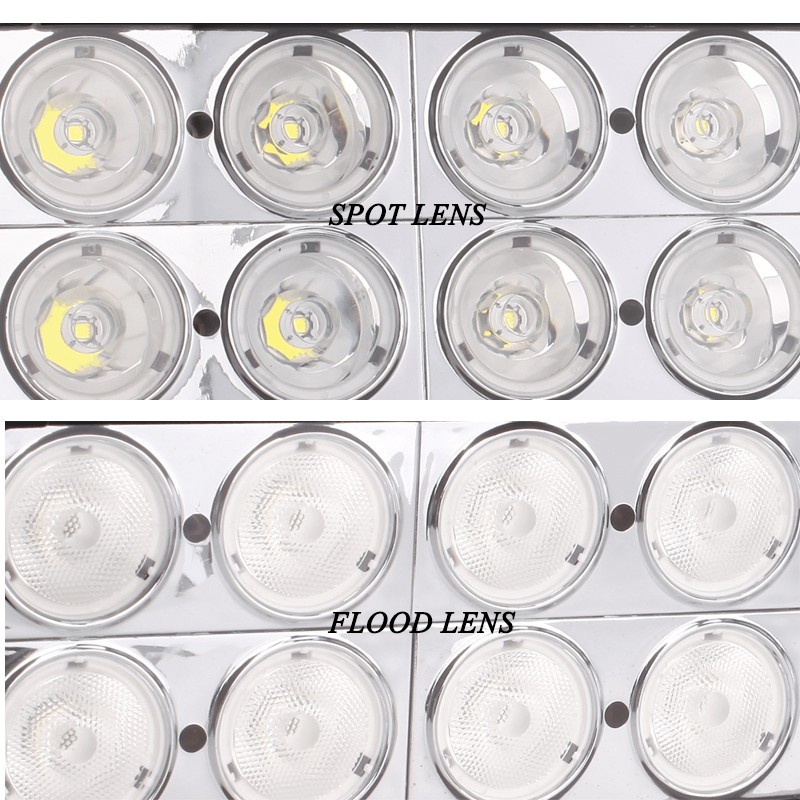
Spot (Pencil Beam): This pattern stays tightly focused. It penetrates deep into the darkness. We use spot beams for high-speed driving and long-distance visibility. They give you crucial reaction time when driving fast.
Flood: This pattern creates a wide, dispersed wash of light. Flood beams lack distance but cover your immediate surroundings. They work perfectly for low-speed rock crawling, sharp cornering, or illuminating a static campsite.
Combo: This represents the industry standard for most consumers. Combo bars place tight spot optics in the center and wide flood optics on the outer edges. They provide a versatile, all-in-one lighting solution.
Lens and Reflector Technology
The internal hardware manipulating the light matters more than the diode itself. The industry has evolved significantly from basic reflective cups.
Standard Reflectors: Older designs use open, chrome-plated cups. They remain highly prone to light scatter. They deliver a short projection distance because they cannot control the light tightly.
3D/4D/5D Lenses: The industry now shifts toward advanced projector lenses. Technologies like 4D and 5D accurately capture diode output. They magnify and project the beam cleanly forward. A 5D projector lens vastly outperforms a traditional open-reflector design, throwing usable light much further down the trail.
Understanding a few core technical specifications prevents buyer's remorse. These electrical and thermal metrics determine how well the unit performs in real-world scenarios.
Color Temperature (5000K–6500K)
Light color impacts human vision dramatically. The evidence shows our eyes process the 5000K to 6500K range best at night. This range mimics natural daylight closely. You must avoid cheap bars pushing 7000K or higher. These units emit a harsh blue tint. Blue light causes rapid eye fatigue. It also scatters terribly in dust, fog, and rain, blinding you instead of revealing the trail.
Diode Quality and Heat Management
High temperatures destroy electronics quickly. An established hierarchy exists among LED chips. Entry-level chips generate high heat and often produce a bluish hue. Premium tier chips from manufacturers like Cree, Osram, and Philips operate differently. They offer superior thermal management and true-white focus. Better heat dissipation prevents the diodes from burning out prematurely during long night runs.
Wattage vs. Battery Drain
You must balance light output against your vehicle's electrical capacity. Let us look at the implementation reality. A standard 40W halogen bulb produces roughly 450 lumens. Modern LED efficiency sits at roughly 80 percent, producing massive light for the same power. However, high-output bars still draw significant amperage. We strongly emphasize calculating your total amp draw. This becomes critical for users running lights with the engine off. Drawing too many amps while setting up camp will leave you with a dead battery in a remote location.
Installation Feasibility, Durability, and Compliance
Purchasing a powerful light means nothing if water destroys it on the first river crossing. Durability ratings and installation hardware separate professional equipment from amateur toys.
Environmental Protection (Ingress Ratings)
Off-road environments subject equipment to extreme abuse. We consider IP67 the absolute minimum viable standard. An IP67 rating ensures the housing remains dust-tight and survives one meter of water immersion for 30 minutes. If your adventures involve frequent, deep water crossings or high-pressure mud washing, you must mandate IP68 or IP69K ratings. These higher tiers guarantee survival under extreme moisture pressure.
Connector Types and Wiring Harnesses
Wiring often causes the most frustration during upgrades. You want to avoid installation nightmares. Ensure your chosen kit uses standardized, waterproof connectors. Specifically, look for ATP or DT connectors. These plug-and-play terminals lock securely. They prevent electrical shorts caused by water intrusion. Using standard DT connectors also makes swapping broken components much easier later.
Best Practices for Wiring:
Always use an appropriately sized inline fuse.
Route wiring harnesses away from high-heat engine components.
Use dielectric grease inside connectors for extra moisture defense.
DOT Compliance and Highway Legalities
You must manage legal risks when mounting auxiliary lights. Law enforcement generally classifies LED Light Bars strictly as "off-road use only." Operating a 20,000-lumen light bar on a public highway blinds oncoming traffic instantly. We advise all users to check their local and state DOT laws. Some jurisdictions require opaque covers over auxiliary lights while driving on paved roads. Following local laws helps you avoid steep fines and vehicle inspections.
Vendor Evaluation: How to Spot Premium Brands vs. Reseller Scams
The aftermarket lighting industry contains exceptional manufacturers and deceptive resellers. Knowing how to evaluate a vendor protects your investment.
The Reseller Mark-up Warning
The market suffers from a flood of generic imports. We warn buyers about the prevalence of white-labeled products. Many online sellers buy cheap, generic units and apply a random logo. They sell these at 300% markups without investing a single dollar in internal R&D. These products usually feature poor seals, counterfeit diodes, and fabricated lumen claims. Look for brands that detail their engineering processes and proprietary optical designs.
Warranty as a Trust Signal
A warranty tells you exactly what the manufacturer thinks of their own product. Look for brands offering comprehensive or lifetime warranties. A long-term warranty indicates strong corporate confidence in their housing seals and diode longevity. Companies selling generic, poorly sealed imports rarely offer more than a 30-day return policy. They know the lights will gather moisture quickly.
Customer Support and Ecosystem
A reputable vendor supplies an entire ecosystem, not just the raw light bar. Professional companies provide vehicle-specific mounting brackets. They offer spacer packs to ensure a perfect fit without rattling. They also staff reliable customer service teams who understand wiring loads and vehicle alternators. This ecosystem ensures your installation goes smoothly and remains secure on rough terrain.
Conclusion
The best LED light bar balances physical dimensions with your vehicle’s specific mounting points. It prioritizes advanced lens optics over inflated raw lumens. It utilizes high-quality, efficient chips to prevent electrical strain on your alternator and battery. Bigger is not automatically better. Smarter optics, robust water resistance, and correct beam patterns deliver true visibility.
Your next step requires immediate action. Measure your intended mounting space carefully. Calculate your alternator and battery spare capacity to ensure safe operation. Finally, shortlist a combo-beam bar from a reputable brand. Ensure the unit carries at least an IP67 rating and a clear, transparent warranty policy.
FAQ
Q: Can I install a 50-inch LED light bar on a compact SUV?
A: It is physically possible, but often causes severe wind noise, aerodynamic drag, and excessive alternator strain. Mid-size units ranging from 20 to 30 inches are usually optimal for compact SUVs. They balance output with a proportional aesthetic.
Q: What is the difference between a single row and a dual row LED light bar?
A: Single rows offer a sleek, highly aerodynamic profile perfectly suited for tight grille spaces. Dual rows double the LED count in the same horizontal footprint. They provide maximum brightness but weigh more and create slightly more drag.
Q: Are yellow or amber LED light bars better than white?
A: Amber light proves superior for poor visibility conditions like fog, heavy dust, or snow. The longer wavelength significantly reduces glare and bounce-back. White light remains the best choice for clear, long-distance night driving.
Q: Do I need an upgraded alternator to run LED light bars?
A: Typically no, due to excellent LED efficiency. However, running multiple high-wattage accessories simultaneously—like heavy-duty winches, portable fridges, and massive light bars—may require a thorough electrical system audit.


