Outfitting your commercial truck requires more than just bolting hardware to the bumper. Modern truck installations involve complex electrical routing. They require careful warranty preservation. Strict legal compliance also plays a massive role. A botched wiring job can easily damage expensive factory computers. It might drain your battery overnight. It could even void a strict lease agreement. Professional installers always follow rigid protocols to avoid these disasters.
A successful installation integrates seamlessly into factory electrical systems. Utilizing OEM upfitter switches provides the safest route. You must completely avoid structural damage. Innovative drill-free mounting techniques make this possible. You must also guarantee uniform flash synchronization across every single light head. In this comprehensive guide, we provide a professional-grade standard operating procedure. You will learn exactly how to evaluate, prepare, and install these critical safety systems. We cover everything from initial bench testing to final wire concealment. Follow these steps. Protect your vehicle's integrity while achieving maximum roadside visibility.
Key Takeaways
Pre-program before mounting: Grouping and syncing flash patterns must be done on a test bench before physical installation.
Protect the chassis: Modern installations utilize existing factory holes and ABS backers to achieve a drill-free, lease-friendly setup.
Leverage factory infrastructure: Wiring directly into OEM auxiliary/upfitter switches is the safest route for power management.
Compliance is non-negotiable: Equipment must meet SAE J595/J845 standards and OSHA visibility requirements for commercial use.
The Legal Baseline & Equipment Selection Framework
You cannot simply strap the brightest bulbs onto your roof. Regulatory realities dictate exactly what you can use. The compliance landscape varies slightly by state. However, federal guidelines establish a strict baseline. Night work visibility falls under strict agency rules. You must meet specific benchmarks to operate legally.
Every chosen LED Warning Light requires careful verification. Look for SAE J595 or SAE J845 certifications. These standards govern minimum brightness levels. They also regulate acceptable lens colors. OSHA 1926.56(a) mandates clear visibility requirements for construction environments. You must provide adequate illumination to protect workers. Amber serves as the universal legal standard. It remains the only universally accepted color for public road work. Red or blue lenses usually trigger immediate legal trouble. Leave those colors to sworn law enforcement.
Different truck zones require entirely different lighting strategies. You must map your light types appropriately. We break this down by specific vehicle zones.
Mapping Light Types to Truck Zones
The roof and cab area represent your highest visibility point. You need unobstructed warning signals here. A high-quality COB LED Beacon Light Bar with 16 Flash Patterns provides complete 360-degree coverage. This setup minimizes excessive wind drag. It keeps clearance heights manageable.
Your grille and bumpers serve as directional warning zones. Surface-mount linear units perform best here. They punch through traffic glare efficiently. Headlight and taillight housings offer stealthy options. Hideaway strobes mount directly inside the factory reflective casings. They pop brightly when activated. They also require zero external control boxes.
Truck Zone | Recommended Light Type | Primary Function | Key Benefit |
Roof / Cab | Beacon Light Bars | 360-Degree Visibility | Maximum distance warning without high wind resistance. |
Grille / Bumper | Surface-Mount Linear | Directional Forward/Rear Warning | Cuts through headlight glare effectively in traffic. |
Headlight / Taillight | Hideaway Inserts | Supplemental Flashing | Zero external footprint. Clean factory look. |
We must issue a strong procurement warning. Always evaluate kits based on their internal engineering. Look for units featuring integrated drivers. Integrated drivers eliminate bulky external strobe controllers. You save precious space under the hood. Furthermore, demand an IP67 waterproof rating. Lower ratings invite moisture failure after your first heavy rain.
Pre-Installation Crucial Step: The "Sync Before You Wire" Rule
Many novice installers fall into the synchronization trap. They bolt every housing to the truck. They route all the cables neatly. They apply power. Suddenly, the truck looks like a chaotic disco ball. Every module flashes at a totally different speed. Fixing this mistake requires tearing the entire wire harness apart.
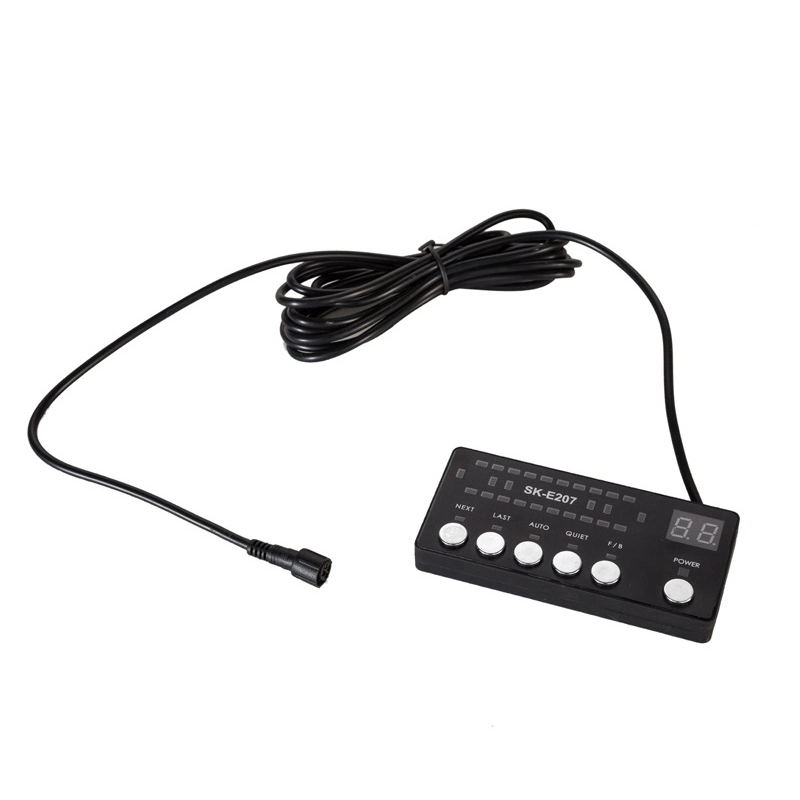
You must program everything first. Grouping and syncing flash patterns happens on a test bench. This pre-programming saves countless hours of frustration. Follow a strict bench testing protocol.
Bench Testing & Programming Protocol
Prepare a 12V Power Source: Set up a dedicated 12V battery or a benchtop power supply.
Connect Common Grounds: Strip the black wires. Twist them together. Secure them to your negative terminal.
Apply Main Power: Twist the red primary power cables together. Connect them to the positive terminal.
Identify the Sync Wire: Locate the specific sync wire. Manufacturers usually use a yellow or white jacket for this function.
Advance the Patterns: Briefly tap the pattern-select wire to the positive terminal. Do this until every module displays your desired sequence.
Master and slave configurations require patience. Explain the logic to your installation team. The sync wire binds the individual brains together. Momentarily applying power to this specific wire changes the mode. You can lock all modules into identical flashes. You can also create alternating X-patterns. Alternating patterns grab more visual attention on busy highways.
We strongly recommend zonal grouping. Do not sync the entire truck to one single pulse. Group your modules intelligently. Create a dedicated grille group. Create a separate tailboard group. Each zone then operates on a unified frequency. The front end flashes together. The rear end flashes independently. This zonal strategy looks highly professional. It also reduces electrical load spikes.
Drill-Free Mounting Strategies for Modern Trucks
Preserving vehicle value remains a top priority. Fleet managers hate seeing holes drilled into expensive grilles. Modern trucks feature massive, complex front ends. A replacement grille for a Ford Super Duty or Chevy Silverado costs thousands. Lease agreements heavily penalize structural modifications. You must adopt non-destructive methods.
The ABS backer method solves this problem brilliantly. You use custom-cut ABS plastic backers. These flat plastic plates act as a rigid sandwich. You place the light on the front of the factory grille mesh. You slide the ABS backer behind the mesh. You run stainless steel bolts through both pieces. This technique securely mounts LED Strobe Lights into honeycomb patterns. It creates a vice-like grip without permanent modification. When the lease ends, simply unbolt the sandwich. The factory grille remains flawless.
Advanced Wire Concealment Techniques
Mounting the hardware covers only half the job. Wire concealment separates amateurs from professionals. Sloppy wiring looks terrible. It also creates severe safety hazards. You must route wires cleanly behind the grille assembly.
Keep every cable away from radiators. Avoid all moving engine parts. Steer entirely clear of extreme heat sources like exhaust manifolds. Heat destroys thin-gauge wire jackets quickly. Exposed wires eventually short out against the chassis.
Always use high-quality split-loom tubing. Slide your cables inside this protective corrugated plastic. Wrap the ends tightly using professional electrical tape. Secure the runs using UV-resistant zip ties. This approach delivers an OEM-level aesthetic. The split-loom tubing prevents chafing against sharp metal edges. It ensures your system survives years of harsh vibrations.
Professional Wiring and Power Management
Power management requires absolute precision. Shortcuts lead to electrical fires. You must ditch the cheap T-taps immediately. Those blue plastic snap-on connectors invite disaster. They slice into wire jackets. They expose raw copper to moisture. They guarantee corrosion. Within a few months, your lights will flicker and fail.
We strongly advocate for marine-grade heat shrink connectors. Crimp the connection solidly. Apply heat until the glue oozes out. This seals the joint completely against water. Proper grounding also determines long-term reliability. Never ground a wire to a random rusty bolt. Find a clean factory grounding point. Scrape away the paint if necessary. Secure the ring terminal tightly.
Cable Specifications and Best Practices
Cable selection matters immensely. Do not use random speaker wire. We recommend industry-standard 18/4 AWG cable. This specifically designed wire contains four distinct color-coded conductors inside one thick jacket. It runs multiple synchronized units efficiently to a single power source. It simplifies complex layouts significantly.
Best Practices vs. Common Mistakes
Best Practice: Use an inline fuse within six inches of the battery.
Common Mistake: Relying solely on the factory circuit fuse, risking an overload.
Best Practice: Route 18/4 cable along existing factory wire harnesses.
Common Mistake: Stretching wires tightly across empty engine bay voids.
Best Practice: Solder and heat-shrink all exterior splices.
Common Mistake: Using twist-on wire nuts meant for indoor residential drywall.
Integrating Factory Upfitter Switches
Most heavy-duty trucks feature factory upfitter switches. Automakers pre-wire these auxiliary circuits specifically for aftermarket equipment. They provide the absolute safest route for power management. You simply locate the blunt-cut customer access wires. You identify the corresponding switch amperage. You connect your main power feed directly to it. The truck's internal computer handles all relay and fuse duties.
For trucks lacking upfitter switches, you build your own circuit. Detail the process of using an Add-a-Fuse tap. You plug this device directly into the engine bay fuse box. Choose an ignition-switched slot. This guarantees zero parasitic battery draw. When you turn the key off, the circuit dies completely. Power flows from the fuse tap to a dedicated aftermarket switch panel inside the cab. Run your wires cleanly through the factory firewall grommet.
Evaluating Scalability and Fleet Readiness (Decision-Stage Logic)
Building a scalable system requires foresight. Fleet managers must evaluate long-term maintenance. Argue the business case for adopting a single ecosystem. Standardization saves massive amounts of money. Mixing brands almost always breaks sync-wire compatibility. A Brookings module will not talk to a Whelen module. Stick to one cohesive product line across your entire fleet.
Maintenance realities heavily influence purchasing logic. Centralized strobe systems used to dominate the market. They relied on a massive brain-box hidden under the seat. If that box failed, the entire truck went dark. Today, decentralized built-in flashers rule the industry.
Chart: Decentralized vs. Centralized Flasher Systems
System Architecture | Installation Difficulty | Failure Impact | Maintenance Cost |
Decentralized (Self-Contained) | Low (Only needs power & ground) | Isolated (One unit fails, others work) | Low (Replace single faulty head) |
Centralized (Brain-Box) | High (Complex multi-wire runs) | Total (Brain fails, all lights stop) | High (Diagnosing & replacing brain) |
Hideaways and self-contained surface mounts contain their own internal brains. They are significantly easier to install. They cost far less to replace. You avoid diagnosing a failed centralized module. If one bumper module takes a rock hit, you simply swap that single piece. The rest of the vehicle continues operating safely.
Guide your team on the next-step actions. Map out your specific truck's blind spots carefully. Walk around the vehicle at night. Identify shadow zones. Tally the required total amp draw. Add up the wattage of every planned module. Ensure your selected switch can handle the load. Select a cohesive, plug-and-play package based on these exact calculations. Plan the work precisely, then work the plan safely.
Conclusion
A reliable installation perfectly balances high-visibility equipment against conservative wiring practices. Slapping parts onto a truck haphazardly invites legal and mechanical trouble. You must protect the vehicle's structural integrity. You must utilize smart mounting techniques like ABS backers. You must test and sync every pattern before touching a wire cutter. You must respect electrical limits by integrating factory switches.
Taking the time to route cables professionally pays off immediately. It prevents frustrating shorts and failures during critical operations. It ensures you meet all OSHA and DOT compliance regulations. Do not compromise on your safety warning equipment.
Take action today. Browse compliant, sync-ready strobe kits tailored to your specific truck model. If you manage a large fleet, consider professional help. Utilize a dealer locator tool. Find certified commercial installers who guarantee fleet compliance and warranty preservation. Equip your trucks properly. Keep your work crews safe.
FAQ
Q: How do I make all my LED strobe lights flash at the same time?
A: You must tie the specific sync wires together before finalizing your wiring run. Manufacturers usually designate a yellow or white wire for syncing. Connect all units to a 12V bench power supply. Tap the pattern-select wire to advance every head to the exact same pattern. Once locked in, proceed with mounting.
Q: Can I install LED strobe lights on my snow plow truck?
A: Yes. However, snow plows face unique visibility challenges. Falling snow quickly covers standard grilles. You need heated lenses to melt ice build-up automatically. Consider high-mounted flood and strobe combos. Mount them high on a roof rack. This cuts through the storm effectively without blinding oncoming traffic.
Q: Do I need a separate control box for my warning lights?
A: No. Modern premium strobes feature self-contained flashers built directly into the housing base. The circuitry handles all pattern generation internally. You only need to supply standard 12V power and a ground. A simple toggle or upfitter switch turns the entire system on and off safely.


