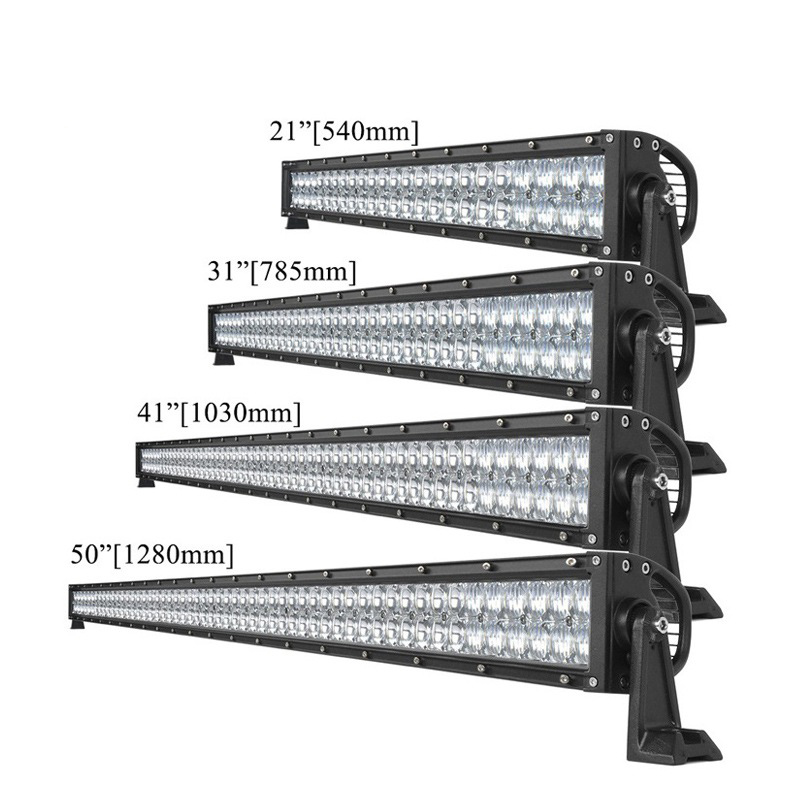
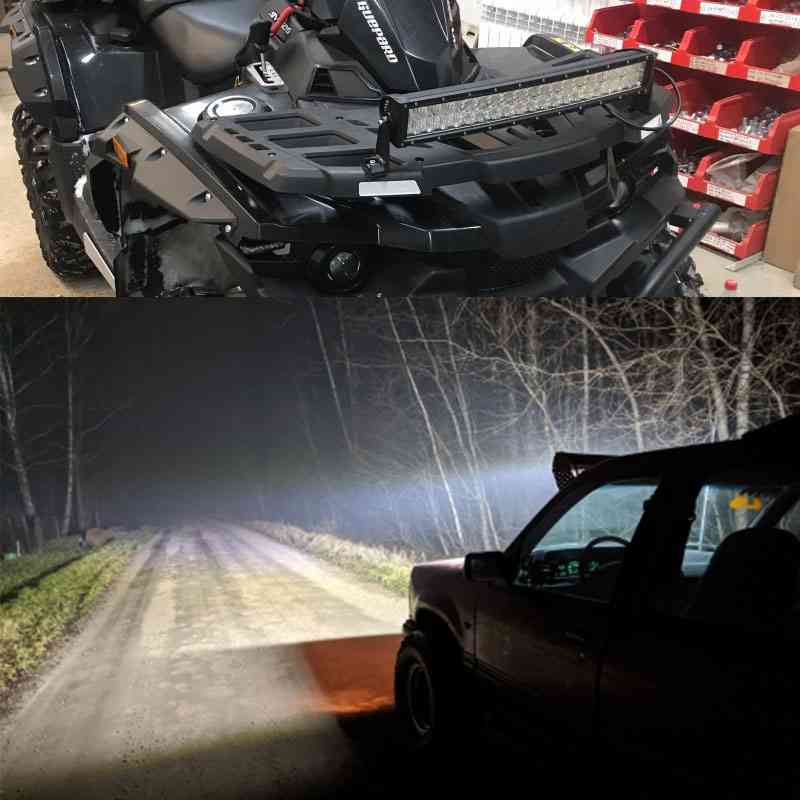
Selecting auxiliary lighting requires balancing physical dimensions, aerodynamics, and optical efficiency to achieve real-world performance. Buyers frequently misjudge the trade-off between physical footprint and light output. This miscalculation results in mounting clearance failures, excessive highway wind noise, or inadequate trail visibility. When evaluating a LED light bar, understanding the structural and electrical differences between single and dual row configurations dictates whether you get optimal illumination or a compromised vehicle setup. This guide provides a technical evaluation of single and dual row configurations. We compare optical technologies, mounting realities, and electrical demands to help you select the exact fit for your vehicle's requirements. You will learn how to match beam patterns to driving environments, assess electrical loads, and navigate the physical constraints of modern vehicle integration without relying on inflated lumen claims.
Key Takeaways
Profile vs. Output: Single row bars offer superior aerodynamics and fit into tight clearances (grilles, roof racks), while dual row bars maximize raw lumen output within a shorter horizontal footprint.
Optical Efficiency Matters: Raw LED count is secondary to lens technology; advanced setups like 5D optics can make a highly efficient single row outperform a standard dual row in usable lux.
Mounting Realities: Dual row bars require significantly more depth and robust mounting brackets due to increased weight and thermal mass.
Electrical Load: Dual row configurations generally draw higher amperage, requiring careful evaluation of your vehicle’s alternator capacity and relay harness sizing.
Understanding the Baseline: LED Light Bar Architecture
Single Row Architecture
The structural profile of a single row unit typically ranges from 1.5 to 2 inches in height. This slim form factor dictates a reliance on higher-wattage individual LED chips, such as 5W or 10W diodes from manufacturers like Osram or Cree, to compensate for having fewer total diodes than a dual row counterpart. By utilizing fewer, more powerful chips, these units maintain high intensity while keeping the physical footprint minimal. You can mount them in tight spaces where airflow to the radiator must remain unobstructed.
A major advantage of this architecture is the streamlined thermal management system. The reduced surface area exposed to frontal impacts makes them less susceptible to trail damage from rocks and branches. The lower profile requires smaller cooling fins, which integrate smoothly into tight vehicle spaces while efficiently dissipating the heat generated by the high-wattage chips. Less mass means less vibration transfer to the mounting brackets.
Dual Row Architecture
Dual row systems feature a structural profile typically measuring 3 to 4 inches in height. This stacked diode configuration often utilizes a higher volume of lower-wattage chips, such as 3W per chip, to balance heat distribution across a larger surface area. The sheer number of diodes allows for massive raw lumen generation within a relatively short horizontal span. If you only have 20 inches of mounting width on a bull bar, a dual row maximizes the light output for that specific space.
To manage the increased heat generation from the dense cluster of LEDs, these units necessitate deeper extruded aluminum housings, typically cast from 6063 alloy. The increased thermal mass and larger cooling fins prevent thermal throttling during extended operation. This adds significant weight and depth to the overall assembly, requiring heavy-duty mounting solutions.
Sealing and Ingress Protection (IP) Differences
Housing perimeter length directly affects gasket compression and overall weather resistance. A single row unit has a shorter continuous sealing edge, which allows for more uniform pressure along the silicone or rubber gaskets. This tight seal maintains high Ingress Protection (IP) ratings against moisture intrusion during water crossings or heavy rain.
The larger lens surface and longer perimeter of a dual row configuration present more potential points of failure under thermal cycling and high-pressure washes. The expansion and contraction of the larger aluminum housing can stress the lens seals. High-quality construction and military-grade breather valves are essential to prevent internal condensation from forming behind the lens.
Feature
Single Row
Dual Row
Vertical Profile
1.5 to 2 inches
3 to 4 inches
Typical Chip Wattage
5W to 10W
3W to 5W
Aerodynamic Drag
Low
High
Mounting Depth Required
Minimal
Significant
Ideal Application
Grilles, Roof Racks, Bumpers
Heavy-Duty Bumpers, Headache Racks
Core Evaluation Dimensions: Single vs. Dual Row
Lumen Output, Beam Penetration, and Optical Patterns
Evaluating lighting performance requires contrasting raw lumens against effective lux. Raw lumens represent theoretical output, while effective lux measures the usable light at a specific distance. A dual row unit may boast a massive raw lumen count, but without efficient optics, much of that light scatters into the foreground. Single row units utilizing large, deep reflectors often excel at long-distance spot penetration by tightly focusing the available light down the trail.
Optical pattern flexibility differs significantly between the two. Dual rows easily accommodate true combo beams by utilizing stacked layers of distinct flood and spot reflectors. The top row projects a spot beam while the bottom row provides a wide flood pattern. Single rows must rely on horizontal segmentation, dedicating specific sections of the linear array to different beam patterns. This limits the overall width of the flood projection compared to a stacked design.
Mounting Constraints and Vehicle Aesthetics
Single row applications excel in environments where space is at a premium. Their low-profile design makes them ideal for behind-the-grille stealth mounts, integration into slim bumper slots, and low-profile roof rack installations. They blend seamlessly into modern vehicle aesthetics without obstructing airflow to the radiator or intercooler. You avoid overheating issues while maintaining a clean factory look.
Dual row applications demand substantial vertical and depth clearance. They fit best on heavy-duty front bumpers, dedicated headache racks, and locations where vertical space is unrestricted. The increased weight of these units introduces structural and torsional stress on mounting brackets. On corrugated, high-vibration off-road trails, a heavy dual row bar requires robust, reinforced mounting hardware to prevent metal fatigue and bracket failure.
Aerodynamics, Wind Drag, and Resonance
At highway speeds, the drag coefficient differences between the two configurations become highly apparent. Single row units present a minimal wind resistance profile, allowing air to flow smoothly over the housing. Dual row units, with their tall, blocky faces and deep cooling fins, create significant aerodynamic drag that impacts fuel efficiency and generates noise.
This drag is the primary physical cause of the whistle or humming effect often experienced with roof-mounted lighting. As air passes over the rear cooling fins, it creates a Kármán vortex street—a repeating pattern of swirling vortices that generate harmonic resonance. To mitigate this noise in dual row setups, installers must utilize rubber isolation dampeners, aerodynamic fin silencers, or adjust the physical mounting location backward on the roofline to alter the airflow dynamics.
Power Draw, Voltage Drop, and Electrical Load
Electrical scalability dictates how you wire an auxiliary lighting system. Dual row configurations generally draw higher amperage per inch than single row units due to the sheer volume of diodes. This increased current draw requires careful evaluation of wire gauge requirements to prevent voltage drops over long cable runs from the battery to the mounting location.
Running multiple dual row setups necessitates upgrading wiring harnesses and utilizing higher-capacity switching relays. The vehicle's alternator capacity must sustain the continuous electrical load without draining the battery or causing the factory electrical systems to malfunction during low-speed, high-draw scenarios like night-time winching.
Follow these steps to ensure proper electrical installation:
Calculate the total amperage draw by dividing the total wattage of the light bar by your vehicle's voltage (typically 12V or 24V).
Select a wire gauge (AWG) rated for at least 125% of the calculated continuous amperage draw to account for resistance over the length of the wire run.
Install an appropriately sized inline fuse as close to the battery terminal as possible to protect the circuit from shorts.
Mount a high-capacity relay (e.g., 40A or 80A depending on the load) in a dry, secure location within the engine bay.
Route all wiring away from high-heat sources like exhaust manifolds and moving parts like cooling fans, securing the harness with zip ties and split loom tubing.
Advanced Optical Technology: 5D Dual Row LED Light Bars
The Evolution of Optics
The progression of auxiliary lighting optics has moved from standard 3D and 4D reflectors to highly advanced 5D technology. Early reflector designs simply bounced light forward, resulting in significant scatter and wasted energy. Modern optical engineering focuses on capturing every lumen generated by the diode and directing it precisely where it is needed on the trail. This reduces glare and maximizes usable light.
How 5D Optics Change the Output Equation
Advanced systems like 5D Dual Row LED Light Bars combine a magnifying projector lens with a deep reflector cup to capture and focus maximum light. This dual-stage refraction significantly reduces light scatter, pushing the intense output of a stacked configuration much further down the trail without creating blinding foreground glare.
By minimizing light transmission loss compared to traditional flat-lens designs, 5D optics maximize the effective lux of the unit. The projector lens ensures a sharp cutoff and focused beam. This makes the light highly usable at high speeds where long-distance visibility dictates reaction time and driver safety.
Cost vs. Performance Trade-off
The premium price of 5D optics is justified based on specific driving speeds and environments. For high-speed desert running, the ability to project light hundreds of yards downrange is a safety necessity. For low-speed tight trail crawling where immediate foreground illumination is the primary goal, standard reflector optics provide sufficient performance at a lower cost. Match the optic technology to your primary driving environment.
The Shape Factor: Straight vs. Curved LED Light Bar
Beam Spread Geometry
Straight bars project a linear, highly focused beam that is ideal for high-speed, straight-line visibility. The forward-facing diodes concentrate their energy directly ahead of the vehicle. In contrast, a Curved Led Light Bar alters the optical angle of the outer LEDs, widening the horizontal field of view and casting light into the peripheral zones.
When to Choose a Curved LED Light Bar
Curved profiles are highly effective on winding forest trails and wide-open desert expanses where peripheral vision is critical for spotting wildlife or navigating sharp turns. Aesthetically, they match the natural curvature of modern vehicle windshields and rounded front bumpers, providing a sleek, integrated look that straight bars cannot achieve on modern curved front ends.
Curved units introduce mounting complexities. They require specific curved brackets that must align perfectly with the vehicle's mounting points. They also present unique wind noise profiles, as the curved face interacts with airflow differently than a flat surface, sometimes requiring specialized wind deflectors to eliminate harmonic vibrations at highway speeds.
Combining Curves with High-End Optics
When a curved profile is paired with advanced 5D optics, the result is exceptional peripheral projection efficiency. The projector lenses maintain tight beam control, pushing light far down the trail. The physical arc of the housing ensures that the focused beams fan out smoothly, providing a massive, uninterrupted wall of light without the dark spots common in segmented straight bars.
Implementation Realities and Adoption Risks
Clearance and Hardware Failures
Roof-mounting deep dual row bars introduces a significant risk of hood glare. The intense light reflects off the vehicle's hood, blinding the driver and destroying night vision. A single row unit's tighter beam control and lower profile naturally reduce this backscatter. The weight of these systems demands robust anti-theft hardware and vibration-dampening mounts to prevent the heavy units from tearing through sheet metal or loosening over corrugated terrain.
Thermal Throttling and Heat Dissipation
Poorly designed housings fail to dissipate heat effectively. When cheap dual row bars overheat, they experience thermal runaway, forcing the internal circuitry to automatically dim the output to prevent catastrophic diode failure. This thermal throttling entirely negates the size and lumen advantage of the dual row design. High-quality units utilize pressure-equalizing military-grade breather valves to manage internal pressure and prevent condensation build-up inside the lens during rapid temperature changes.
Legal and On-Road Compliance
You must understand DOT and SAE regulations regarding auxiliary lighting on public roads. High-output light bars are strictly for off-road use unless they are specifically certified as SAE/DOT fog, auxiliary high beam, or driving compliant. Utilizing non-compliant, high-glare lighting on public highways poses a severe safety risk to oncoming traffic and violates vehicle codes. Always wire auxiliary lighting to an independent switch separate from factory high beams.
Decision Framework: Which Configuration Fits Your Application?
Choose Single Row If:
Mounting space is vertically restricted under 2.5 inches.
Aerodynamics and minimizing wind noise are top priorities for a highway-driven daily vehicle.
You require a stealthy, factory-look installation behind grilles or flush-mounted in bumpers.
You prioritize long-distance spot penetration over massive foreground flood fill.
Choose Dual Row If:
You need maximum raw light output and a wide flood pattern in a shorter horizontal space.
You have robust, heavy-duty mounting points like bull bars, steel bumpers, or heavy-duty roof racks.
Your primary environment requires massive foreground flood lighting at slower speeds for rock crawling or forestry work.
Vehicle-Type Match Matrix
Overland & Daily Driver Rigs: Single Row is recommended for fuel economy, low noise, and sleek integration.
Dedicated Off-Road Racing & Desert Pre-runners: Curved or 5D Dual Row is recommended for maximum high-speed coverage and peripheral vision.
Work Trucks & Agricultural Equipment: Standard Dual Row is recommended for massive close-range utility lighting and durability.
Conclusion
The choice between single and dual row configurations dictates your vehicle's lighting performance and aerodynamic efficiency. Prioritize physical fitment first; a high-quality single row that fits perfectly will always outlast and outperform a cheap dual row crammed into an inadequate space with poor airflow. Match the optic style to your driving speed and terrain.
Measure your intended mounting location precisely, accounting for the required bracket depth and rear cooling fin clearance.
Check your vehicle's alternator output and battery capacity to ensure the electrical system can handle the continuous amperage draw.
Select appropriate wire gauges and high-capacity relays to prevent voltage drop and ensure safe, reliable operation.
Determine if your driving style requires the wide peripheral spread of a curved bar or the focused intensity of 5D optics.
FAQ
Q: Are dual row LED light bars always brighter than single row bars?
A: Not necessarily. While they have more LEDs, a high-end single row with superior 10W chips and advanced optics can produce more usable lux than a budget dual row with inefficient 3W chips.
Q: Can I mount a dual row bar in a tight bumper slot?
A: Usually no. Dual row bars require 3 to 4 inches of vertical clearance, plus additional room for airflow to the rear cooling fins to prevent thermal throttling.
Q: What is a 5D dual row LED light bar?
A: It is a light bar that utilizes a combination of a traditional reflector cup and a magnifying projector lens over each LED, significantly reducing light scatter and increasing long-distance beam penetration.
Q: Does a curved LED light bar provide better peripheral vision?
A: Yes. The physical arc of the bar angles the outer LEDs outward, casting light wider into the ditches and tree lines compared to a straight bar.
Q: Do single row light bars whistle less on the highway?
A: Yes. Their lower profile creates less aerodynamic drag and turbulence, significantly reducing the harmonic vibrations commonly associated with bulky dual row bars.
Shenzhen Creek Optoelectronic Technologies Co., Ltd. produce Car LED work lights, off-road LED light bar, forklift safety lights, agricultural tractor work lights, LED strobe and beacon lights, car radios, etc.