Industrial buyers face a frustrating dilemma on a daily basis. Manufacturers frequently promise up to 50,000 hours of operating life for their lighting fixtures. Yet, cheap units often fail prematurely in harsh, demanding environments. We see this exact problem across numerous warehouses and construction sites. The core diode technology inherently lasts a very long time. However, achieving true longevity requires highly specific structural engineering. A vibrating warehouse forklift or outdoor heavy machinery will quickly destroy a standard light. This guide serves as a practical decision-making tool for your facility managers. Procurement teams will learn how to evaluate physical build quality effectively. We help you separate misleading marketing claims from undeniable structural reality. You will discover exactly what makes reliable LED Work Lights survive extreme daily conditions.
Key Takeaways
LEDs outlast traditional bulbs because they use solid-state technology (no fragile filaments or gases).
The primary causes of premature LED failure are poor thermal management (heat) and cheap driver components, not the diode itself.
Industrial applications require specific builds—such as a waterproof LED work lamp for heavy machinery—to combat moisture, dust, and severe vibration.
Evaluating Total Cost of Ownership (TCO) means looking beyond the sticker price to heat sink quality, IP ratings, and warranty terms.
The Core Science: Why Solid-State Lighting Inherently Lasts Longer
We must first understand the fundamental mechanism of electroluminescence. Semiconductors channel electrons through specific microscopic pathways. They recombine perfectly within semiconductor holes. They emit energy strictly in the form of photons. This process generates significantly less heat overall. It wastes near-zero energy compared to older lighting technologies. Incandescent bulbs operate entirely differently. They heat a tungsten filament until it glows white-hot. They essentially act as highly inefficient space heaters. Solid-state technology bypasses this wasteful heating process completely.
You can clearly contrast the structural builds of these technologies. Traditional halogen bulbs rely heavily on fragile glass enclosures. They contain delicate inner filaments suspended in gas. Heavy machinery vibrates constantly during normal operation. These intense vibrations snap heated filaments very quickly. Solid-state chips differ drastically. They rest securely flat against rigid circuit boards. They contain absolutely zero moving parts. They lack any fragile glass envelopes to shatter.
We see a profound operational outcome resulting from this solid-state design. Eliminating filaments drastically reduces your replacement frequency. You save significant maintenance labor hours every month. This proves especially critical for hard-to-reach heavy machinery. Mechanics spend far less time climbing on excavators just to swap bulbs. Your equipment stays on the floor producing consistent value.
Comparison Summary: Solid-State vs. Legacy Lighting
Feature
Legacy Halogen/Incandescent
Solid-State Diode Technology
Light Generation
Superheating a tungsten filament
Direct electron recombination
Energy Waste
Extremely high (lost as heat)
Near-zero
Structural Integrity
Fragile glass and delicate wire
Rigid semiconductor on board
Vibration Tolerance
Very low (snaps easily)
Extremely high
The "50,000-Hour Myth" vs. Industrial Reality
Industry standards frequently claim a massive 50,000-hour lifespan. Engineers generally refer to this as the L70 standard metric. It indicates exactly when light output degrades to 70 percent of its original brightness. However, manufacturers conduct this testing inside perfectly temperature-controlled laboratories. They supply completely stable voltage. These ideal lab conditions rarely match real-world job sites.
Many buyers experience deep frustration early in their deployments. They wonder why their new fixtures burn out after just six months. We must clarify a critical engineering truth here. The actual semiconductor diode rarely fails first. The internal power supply usually dies prematurely instead. Engineers call this vital component the driver. Cheap electrolytic capacitors burst under minor thermal stress. They also fail rapidly during sudden voltage spikes from heavy alternators.
Purchasing standard consumer-grade lighting for commercial applications causes massive failure rates. Retail lights completely lack robust internal potting protection. They cannot handle intense machinery voltage surges. You absolutely need a genuine Heavy Duty Work Light for these harsh environments. Commercial settings punish weak electronic components relentlessly. Industrial-grade solutions isolate these fragile driver circuits securely against operational stress.
5 Key Engineering Factors That Determine Real-World LED Lifespan
We must evaluate structural engineering carefully before making procurement decisions. Five core physical factors dictate actual longevity in the field.
1. Thermal Management (Heat Sinks)
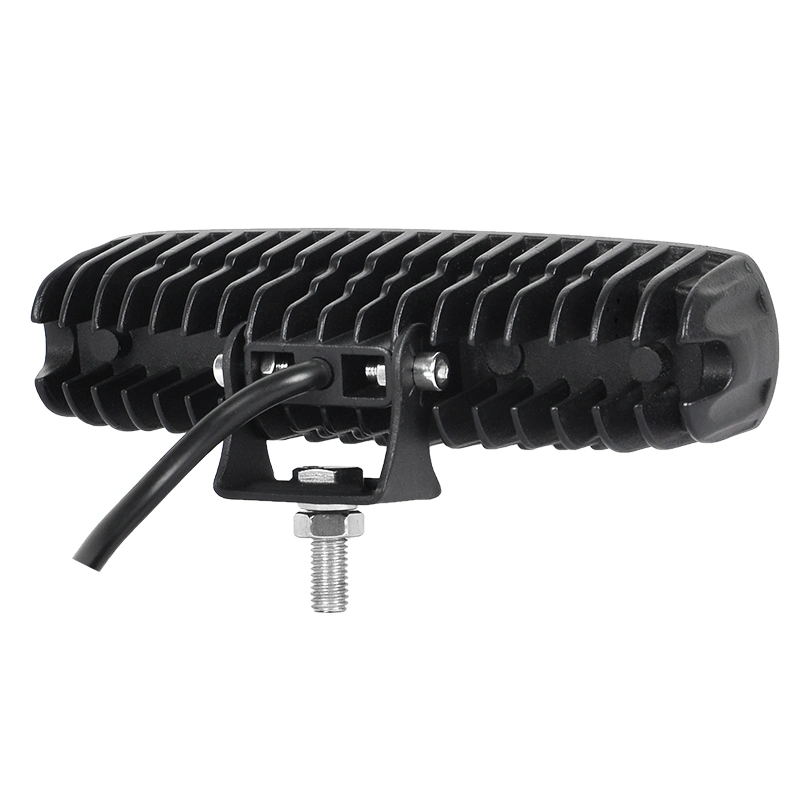
Heat acts as the ultimate enemy of modern electronic components. Die-cast aluminum housings pull destructive heat away from the diode effectively. Massive cooling fins actively increase the external surface area. This physical design dissipates heat into the surrounding air efficiently. You must prioritize excellent heat sinks for any high-lumen output. For example, a reliable 20W waterproof LED work light requires significant thermal mass to survive. Poorly cooled semiconductor chips will dim rapidly and permanently.
2. Driver and Internal Component Quality
Voltage fluctuations occur constantly on heavy equipment electrical systems. High-quality drivers regulate this incoming power smoothly and consistently. Premium manufacturers employ a specialized technique called potting. They pour liquid epoxy resin directly over the internal circuitry. The resin eventually hardens into a dense solid block. This totally seals the delicate driver components inside. It protects them completely from sudden electrical surges and extreme mechanical shock.
3. Ingress Protection (IP & IP69K Ratings)
Water and dust destroy internal electronics almost instantly upon contact. Standard retail fixtures cannot survive a dusty warehouse environment. You need exceptionally high Ingress Protection (IP) ratings. IP67 prevents catastrophic damage from temporary water submersion. IP69K withstands high-temperature, high-pressure washing from industrial hoses. A certified waterproof LED work lamp for heavy machinery blocks microscopic fine dust entirely. It guarantees the internal cavity remains perfectly dry forever.
4. Vibration and Shock Resistance
Constant mechanical shock easily destroys weak circuit board solder joints. Machinery rumbles violently across uneven concrete surfaces daily. Standard mounting brackets snap quickly under this continuous structural stress. You must specify reinforced circuitry during your evaluation process. Thick mounting hardware absorbs severe impacts effectively. Procuring properly engineered heavy duty LED work lighting for forklift applications prevents premature mechanical failure entirely.
5. Lens Durability
Outer lenses protect the delicate diodes from flying operational debris. Cheap plastic lenses yellow quickly under ultraviolet sunlight exposure. They also crack easily upon receiving minor impacts. Degraded, cloudy lenses scatter light poorly across the workspace. Impact-resistant polycarbonate lenses solve this degradation issue permanently. Polycarbonate maintains excellent optical clarity over many long years. It resists shattering completely even under direct stone strikes.
Summary of Engineering Priorities:
Inspect heat sink weight and fin depth closely.
Verify the internal driver circuit uses solid potting resin.
Demand IP67 or IP69K certificates for wet environments.
Examine the thickness of the supplied mounting brackets.
Confirm the front lens utilizes pure polycarbonate material.
Solution Categories: Matching the Light to the Machinery
Different operational hazards require specific optical configurations to ensure maximum safety. You must match the specific optic type to the localized task.
Beam Patterns
Internal reflectors and lenses dictate how light travels from the source. We generally categorize them into two highly distinct functional types.
Flood Beams: These specific optics provide wide illumination for localized work zones. They spread light evenly across a very broad area. You might install a forklift flood beam LED work light near busy loading docks. It illuminates close-quarter pedestrian hazards perfectly.
Spot Beams: Fast-moving heavy machinery demands long-distance visibility. Spot optics focus the beam tightly forward in a narrow cone. They pierce through darkness over impressive distances. Operators spot potential obstacles well before encountering them safely.
Voltage Compatibility
Heavy machinery electrical systems vary wildly across different vehicle types. Diesel excavators might utilize standard 12V or 24V starting systems. Electric pallet jacks often run on massive 48V or 80V battery circuits. Selecting wide-voltage lighting fixtures proves absolutely crucial here. High-end units handle 10V to 80V ranges seamlessly without failing. They automatically adapt to sudden alternator spikes gracefully.
Use-Case Alignment Matrix
We developed a brief strategic matrix matching specific light types to demanding environments.
How to Evaluate and Shortlist Fleet Lighting (Decision Framework)
Procurement teams need a rigid evaluation framework moving forward. Relying solely on basic specification sheets often leads to poor long-term investments. We recommend adopting a strictly evidence-based approach.
Success Criteria
Buyers often focus mistakenly on achieving the lowest cost per unit. This restricted approach ignores harsh long-term operational reality. You should immediately shift your focus entirely. Calculate the lowest operational cost per functioning hour instead. Frame your overall return on investment around systematically eliminated downtime. Every single minute a machine sits waiting for a bulb change wastes considerable money.
Evidence to Request from Suppliers
Do not accept vague marketing claims blindly during procurement. Demand hard, verifiable evidence from your prospective suppliers directly.
Ask for independent third-party laboratory testing data. Request detailed vibration testing logs and lumen maintenance reports.
Verify the actual stated Ingress Protection rating. Ensure an IP67 or IP68 minimum for any outdoor deployment.
Check warranty specifics carefully. Confirm the warranty covers the sensitive internal driver circuit entirely. Many warranties deceptively cover only the bare aluminum housing.
Implementation Risks
Even the finest fixtures fail quickly if installed improperly. Mixing incompatible voltage systems destroys delicate circuits instantly. Using inadequate aftermarket mounting hardware negates built-in vibration resistance completely. Always use the supplied heavy-duty steel brackets. Ensure maintenance technicians torque all mounting bolts strictly to factory specifications.
Conclusion
Solid-state technology inherently outlasts older lighting methods by an massive margin. However, achieving that promised lifespan depends entirely on robust structural integrity. Excellent thermal management and rugged internal drivers heavily dictate real-world success. You simply cannot compromise on these core engineering elements. High-pressure washing, extreme vibration, and dust will expose weak designs immediately.
We encourage you to audit your current lighting failure rates closely. Define your specific environmental workplace hazards clearly today. Document areas actively experiencing severe vibration, water ingress, or heavy dust. Request a physical sample fixture from a reputable supplier. Run a rigorous, monitored pilot test on your active fleet. Observe the undeniable durability results before committing to a full deployment.
FAQ
Q: Why do some LED work lights fail after only a few months?
A: Premature failure almost always stems from cheap internal components. Poor heat dissipation literally cooks the internal driver circuit. Water ingress due to fake or exaggerated IP ratings shorts the board. The actual diode rarely fails first; the supporting electronics fail due to weak manufacturing standards.
Q: Does a higher wattage mean a shorter lifespan for LED work lights?
A: Not inherently, provided the fixture utilizes an appropriately scaled aluminum heat sink. A properly engineered 20W light will easily outlast a poorly designed 10W light. Thermal management dictates lifespan, not raw wattage. Excessive heat destroys chips, so larger wattage requires heavier cooling fins.
Q: What is the best LED beam pattern for a warehouse forklift?
A: Flood beams are generally best for close-quarters warehouse visibility. They cast a wide, even spread of light across immediate hazards. Facilities often pair them with specialized safety lights, like blue or red halo boundary lights, to drastically increase surrounding pedestrian awareness.
Shenzhen Creek Optoelectronic Technologies Co., Ltd. produce Car LED work lights, off-road LED light bar, forklift safety lights, agricultural tractor work lights, LED strobe and beacon lights, car radios, etc.